We recover the flavours of yesteryear: local potatoes, Belltall garlic and black turnips
Author: Carme Melià
What
Crop recovery
Recover the flavours of yesteryear through traditional crops in projects that value farming, local produce and sustainability. We have selected three specific projects that want to revive local products -potatoes, garlic and turnips-, in some cases practically disappeared and in danger of extinction.
What
Two tubers and a vegetable
The CatOrigen potato is a relatively new project by the Casamitjana brothers -linked to the family business Torribas- that has just launched its first harvests on the market. Belltall garlic, on the other hand, began the crop recovery project several years ago and work is now underway to expand its production. The third example, the black mountain turnip, is one of the tubers that form part of the Refardes catalogue, a cooperative that coordinates the organic production of seeds of local varieties.
Where
In different regions
The recovery of the local potato has begun in crops in eight regions around the country, Belltall garlic is cultivated mainly in the municipality that gives it its name, in the Vall del Corb, while black turnip crops are found in the Girona region.
Find out more
Catalan potato
We eat potatoes in many traditional dishes. From suquet to trinxat, passing through stews and creams. But, contrary to what you might think, the volume of local potato production is not remarkable. With this premise and with the desire to have Catalan potatoes on a regular basis from June to December, the company CatOrigen has started a crop recovery project in eight counties, with small producers and a total of 25 hectares of cultivation: Baix Ebre, Baix Camp, Maresme, Vallès Oriental, Baix Penedès, La Selva, La Noguera and La Cerdanya.
Although we dare not affirm, as Trinca sang, that "man comes from the potato"; We can assure you that this beloved tuber is a basic ingredient in Catalan cuisine. The brothers Sandra and Borja Casamitjana, promoters of the project, are clear about this: "We want CatOrigen to be the benchmark in Catalan potatoes and we also want to introduce onions and garlic, to recover the prominence that these products once had with traditional crops, in our country."
The objective is to value the agricultural and gastronomic heritage, offering consumers local products, of the highest quality and prioritizing sustainable and socially fair practices rooted in the territory. Therefore, they supply the varieties that best adapt to our cuisine, trying to recover the memory of those flavors of yesteryear. CatOrigen focuses on the Amarin potato variety: white meat, very good and mellow, and optimal in stews, suquets, roasts and omelettes. It is similar to traditional Kenebec but more modern, as it adapts better to current cooking types, retains the traditional flavor, and at the same time offers better profitability and also preserves very well.
The first harvests of CatOrigen potatoes are already in supermarkets and retail stores. They come in bags of traditional burlap tissue weighing three kilos. In addition, each region has its own label and through a QR code you can access information on the origin of the product. CatOrigen is a newly created company linked to the family company Torribas SA, dedicated to the production, selection, processing and distribution of potatoes, onions and garlic for more than 80 years.
Image of a potato crop field in Vallès Oriental.
Belltall garlic, a success story in the Vall del Corb
And from potatoes to garlic, specifically Belltall, a success story in the Vall del Corb where Count Dracula would never want to approach. We are talking specifically about dryland garlic grown at a height of 800 meters, which is very well preserved - up to a year, from one crop to another - and that is sold forked, that is, one garlic after another forming like a braid. With a centuries-old history, Belltall garlic had an important production in the mid-twentieth century, but later it was reduced until it was practically reduced to cultivation for self-consumption by farmers in the area. In 2011, a group of people founded the Belltall Garlic Producers Association with the aim of not missing this special vegetable: with pink peel, red cricket and a cabeza smaller than usual garlic, it has a powerful and tasty taste, a fine texture and does not itch or return!
Montse Sánchez, president of the group, emphasizes that it is a natural garlic since in its production process it does not require any type of herbicide and all the work is done manually. The height and microclimate of the soils in the area give Belltall garlic a unique flavour: "The humidity, height and fog in winter make this dryland garlic organoleptically very powerful and perfectly preserved." Of course, the work involved in farmers having to fork it means that it hasa slightly higher selling price than other traditional garlic.
Garlic is planted in November-December and uprooted around San Juan. Since there is not a large production – in fact there is more demand than supply for the less than twenty producers who grow it – in mid-August, coinciding with the Garlic Festival (first Saturday of the month), there is no longer left.
Now, the producers are working in collaboration with other entities, such as the Miquel Agustí Foundation of the UPC -to define exactly what Belltall garlic is and what is not- and the Association of Rural Initiatives of Catalonia ARCA -to see how the cultivation of this vegetable can be mechanized- to try to increase production and, incidentally, motivate young farmers to grow this unique garlic.
Belltall's garlic festival takes place on the first Saturday of August / Rosa Maria Tous
Black mountain turnip, the finest and tastiest
And, as the saying goes, "he who does not have garlic has an onion". But, there are also those that have everything a little bit – yes, we are still talking about crops and vegetables, of course – as is the case of Les Refardes. This cooperative, based in Mura (Bages), coordinates the organic production of seeds of local varieties in eighteen farms throughout Catalonia that are dedicated to the sale of local organic vegetables. A kind of seed bank, which allows us to recover lost crops, but also to rediscover the genetic and agricultural heritage in order to ensure food quality and sovereignty.
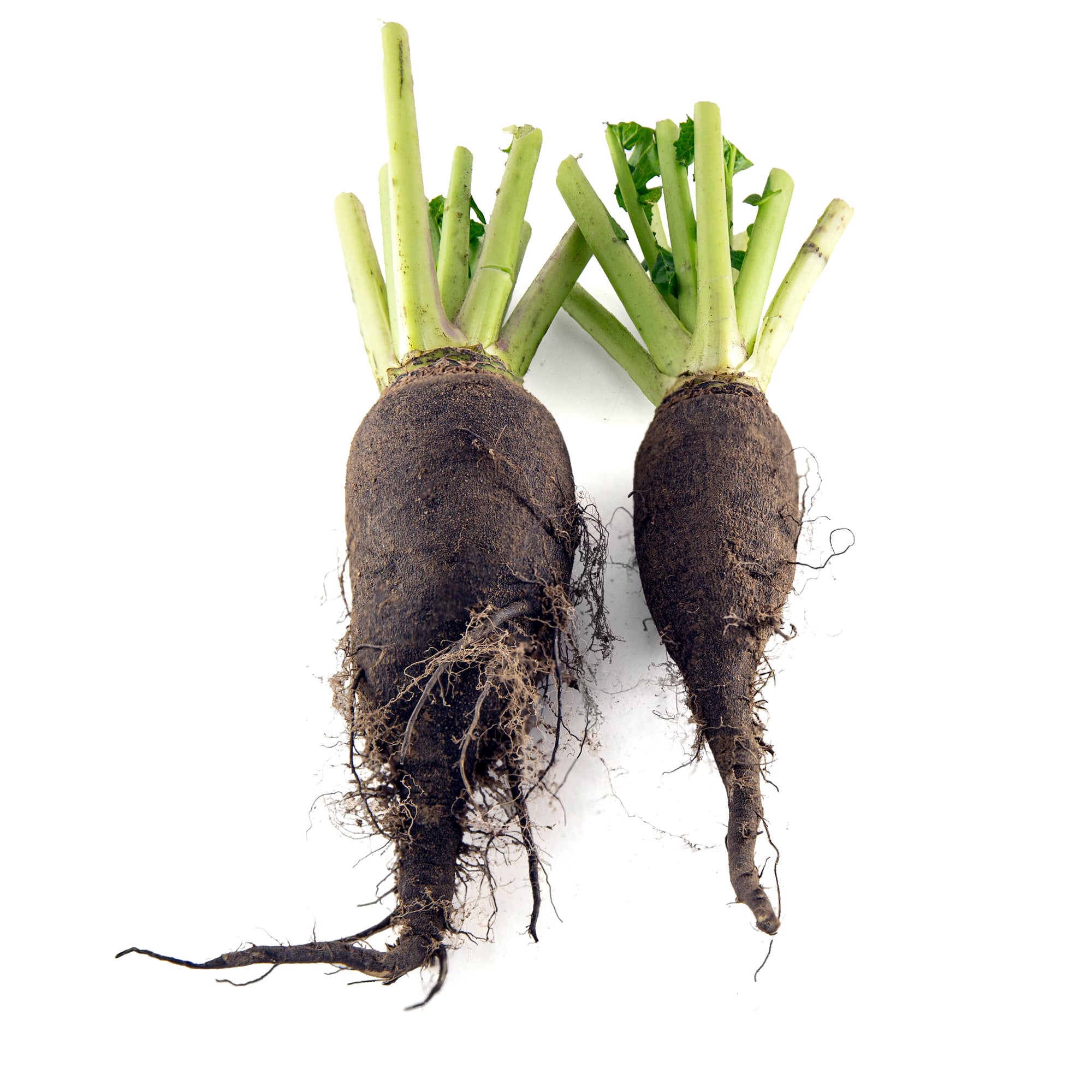
From the extensive catalogue they have in Les Refardes, we have chosen the black mountain turnip as an example of local variety, since originally it was a tuber grown in farmhouses -especially in the Girona region- as a subsistence resource, which used to end up in some escudella. From the cooperative, they explain that it is "Marcel, who lives in Mieres, in La Garrotxa, who makes us the black turnip every year". Throughout the country, there are about thirty producers that cultivate this variety in the Baix Empordà, Garrotxa, Pla de l'Estany, Gironès, La Selva and Alt Empordà. In fact, the black turnip of Capmany is very typical and recognized, a municipality where two young horticulturists revived a few years ago the disappeared cultivation of the so-called negret de Capmany.
Culinarily speaking, this black turnip is now a prestigious product, thanks to its delicate, finer, aromatic and tastier taste than other varieties of turnips. Very thin-skinned, without secondary roots, it has a very dark brown color, almost black. The flesh is firm and, to bear the opposite of its name, very white! It is an elongated and conical turnip, which can be harvested when it is about 20 cm, but can reach up to 35 cm.
It is consumed boiled, seasoned, pickled, in stews or fried as blonde potatoes. The lobed and slightly toothed leaves can also be used to make broth or to eat as a boiled vegetable. It is sown in summer, around August 24, hence the saying: "For Saint Bartholomew, yours can be as good as mine." They are harvested from November and almost throughout the winter, so it is common to make it in typical dishes of the cold season, such as turnips stewed with pig's trotters, with rib head or with broth. And, since we already have very good potatoes, garlic and turnips, we can start thinking about making a good stew, which will soon arrive the first cold of the season.
Black mountain turnip
Squid, the cephalopod that makes rivers of ink run in Arenys de Mar
Author: Carme Melià
Who
Arenys squid
The squid is a mollusk with a skeleton in the shape of a flat and thin piece attached to the body that is usually caught on the Mediterranean coast. It is a marine ingredient rich in iodine, calcium and phosphorus, low in fat and calories, highly appreciated in cooking, not only for its flavor and texture, but also because it has no shell or thorns. On our coasts, there is one with its own name: the Arenys squid, a gastronomic product of kilometer zero that has become a unique element of the cuisine of this town with its own gastronomic days. It is a top quality cephalopod that is fished at a depth of between 20 and 30 meters by the potera method and is marketed in the fish market in the same municipality of Maresme. There are squid of large size, 30 to 60 centimeters, and smaller in size, which are called squid.
What
Gastronomic days
The squid of Arenys or potera is the protagonist of the Calamarenys Gastronomic Days that, for 27 years, have been celebrated in different restaurants in the municipality. For a whole month, Arenys de Mar becomes the gastronomic capital of the Maresme, highlighting a product of sea and season. The participating establishments offer a taste of the town's maritime culture and culinary tradition, using a local ingredient: the squid caught on its coast. Not only are menus offered where the cephalopod is the main protagonist, but there is also a complete program of activities to complement the visit to Arenys: walks through the port, trips in golondrines, guided tours of the town, nature itineraries, talks ... Check all the options available at this link.
When
From October 15 to November 15
The Calamarenys Gastronomic Days take place from October 15 to November 15 in all the restaurants participating in the campaign, but the big day of the initiative is Friday, October 21, when the Calamarenys Gastronomic Show takes place at the Llotja Vella in Port d'Arenys. Different establishments in the municipality offer the possibility of tasting some of the dishes made with local squid in tapa format. Tickets can be purchased on the same day at the exhibition site. A similar proposal, but in this case in the Municipal Market, takes place on the evening of Friday 28, when stallholders and restaurateurs of the town offer tapas of squid, sweets, wine and cava at popular prices.
Find out more
An asset to seafood cuisine
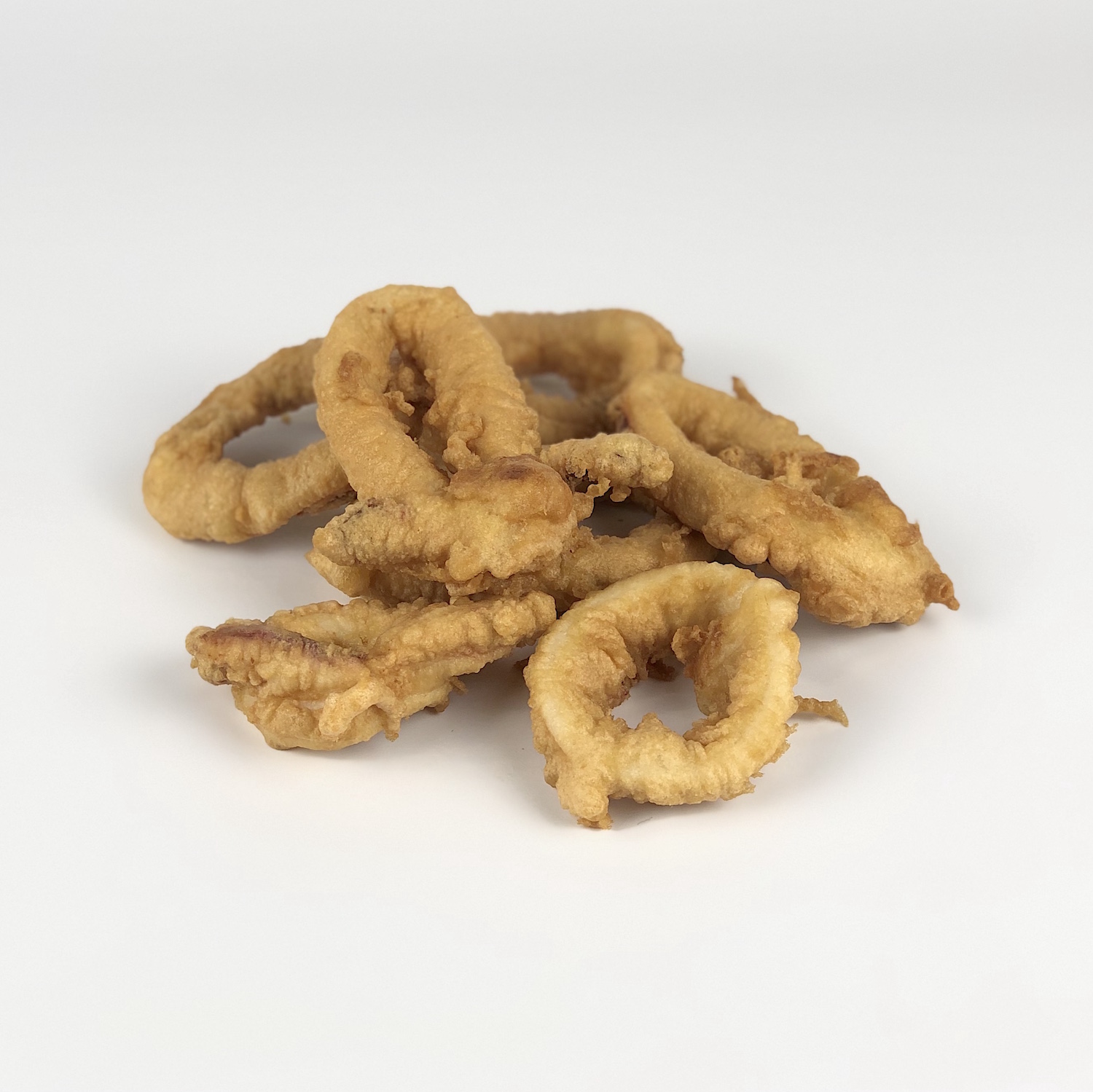
Stuffed, Andalusian, in its ink, fried, a la bruta, with Llavaneras peas, with onion, in a sandwich... and a la Romana, of course! Squid accept many types of cooking and are present in many recipes. And it is not surprising, because its meat is tender and tasty, as long as you cook them properly: or for a long time over low heat (stews, for example) or very little over high heat (turn and turn on the grill). We can say, then, that squid has no middle ground, but neither thorns nor shell! A luxury for chefs and diners, as it facilitates the preparation of dishes and makes them easier to eat.
In general terms, squid is an ingredient that is usually liked, but we know from good ink that on our coast there is a place where they are especially in love with this marine ingredient. Yes, we are talking about Arenys de Mar, in the Maresme. And they are caterinated for two reasons: because of fishing tradition and because of culinary tradition. And no wonder, since this mollusc, which lives in the areas of algae off the coast, is fished with potera, an ecological method that respects the environment much more, as opposed to trawling, and that above all enhances the final product when cooking. That is why many recommend eating it simply grilled, so that the product can excel and expose all its taste and texture. Um, it makes our mouths water...
Squid rings a la romana are one of the most popular dishes.
Arenys, gastronomic capital of squid
If you want to try different dishes with this squid as the protagonist, you will not need to sweat ink in the kitchen. In Arenys de Mar they make it easy for you with the Calamarenys Gastronomic Days, which this year reach the 27th edition. From October 15 to November 15, you can taste a large number of culinary proposals in different restaurants in the municipality made with squid caught in the area.
In this way, for a whole month Arenys de Mar becomes the gastronomic capital of the Maresme, highlighting a marine and seasonal ingredient, with a taste of the maritime culture and culinary tradition of a local food, kilometer zero (or should we say zero wave?).
With Calamarenys, the Arenys squid is the protagonist throughout the month on the menus of many restaurants in the municipality -and some in other towns of the Maresme-, and especially during the exhibition, on October 21, at the Llotja Vella del Port, where you can taste tapas made with squid. In addition, weekends offer a whole series of parallel activities, such as nature itineraries, knowledge of port activity, tapas tasting in the market, stories, talks and scientific dissemination. You can even participate in a fish auction at the Calisay Cultural Center – where the way fish was auctioned years ago by putting the pieces in wicker baskets is reproduced, with a vendor singing the prices until someone buys them.
Squid with artichokes, a sample of the culinary versatility of this ingredient.
Fishing, with patience and nocturnality
But, if what you like is cooking, no problem. Here we give you the recipe to prepare some delicious stuffed squid that are very easy to prepare. Now, if it's about fishing them, that can be a little more complicated and you'll have to be patient. The fishing season for the Arenys squid begins at the end of September (the season lasts until approximately November-December) and is done with the so-called potera technique. A technique that requires, as we said, a little patience and nocturnality. It is, however, an ecological method, as it is not as invasive as trawling.
Potera fishing is carried out with a vertical instrument formed by a crown of non-fatal hooks that is thrown to the bottom of the sea, during the night. The fishermen leave after sunset and, with the help of artificial lights, are located at a depth of between 20 and 30 meters, ideal for catching squid. Once captured, the squid is sold at the Llotja in Arenys de Mar. The potera squid, as they are not dragged by nets, are clean of sand and mud, and with their skin intact. Its flesh has a different texture, is white and has a special taste, with a sweet touch.
The usual specimens are small (squid) or medium (up to 60 cm), far from the giant squid (the little known kraken, which live in great marine depths from other latitudes) and can reach up to 13 meters long and half a ton in weight. Can you imagine how many dishes of squid a la romana could be made?
Grilled squid, a dish to savor the product to the fullest.
Mallart, sausages with social commitment for conscious consumers
Author: Carme Melià
Who
Mas Albornà Mallart Artisans Butchers
The Mas Albornà Foundation, a social entity created more than 50 years ago, became a social initiative of the hundred-year-old Embutidos Mallart when it received the proposal from the same owner family that, when they retired, they had to close the business or find someone to continue it. The heir of the Mallarts, with intellectual disabilities, although he has always worked in the company, did not have enough tools to manage it himself.
For this reason, the parents decided to look for an alternative within the territory and chose the Penedès Fundació Mas Albornà to take the reins of the business through a social initiative project maintaining the essence and know-how of Mallart: in this way they could perpetuate the family legacy and at the same time give continuity of work to their son Ernest.
What
The first social sausages
In 2018, Fundació Mas Albornà refounded Mallart and Mallart Artesans Xarcuters was born with a socially based objective, with a more business nature, a makeover, a new workshop and a powerful investment. It is a new company that starts from the traditional process of artisan elaboration and maintains its roots. For this reason, the range of products is redefined, with new production criteria, although the same three production families are maintained: cooked, cured and fresh.
The sausages are made with natural ingredients, such as Ral d'Avinyó pork, and are made by hand stuffed with natural casings and without using gluten or lactose. As a novelty, the company has also begun to make made with meat of the Gall del Penedès variety, also certified with a PGI.
Where
La Llacuna
A town in the region of Anoia with a long tradition in the production of artisan sausages. On the one hand, because it is located 600 meters high, with geographical and climatic conditions that favor favourable winds for the drying of these products. On the other hand, due to the proximity to the Camí Ral and the annual celebration of the Fira de Sant Andreu, two facts that made the people of Lagoon start breeding pigs and the production of sausages for many centuries. Since 1916 and for five generations, the Mallart family has produced their sausages in La Llacuna, where the company has continued to be located once transferred to the Mas Albornà Foundation, based in Vilafranca del Penedès.
Find out more
Mallart's refoundation
Sausages and other artisan charcuterie products, with natural casings and selected ingredients, made with traditional recipes from the territory. Quality and tradition. However, at Mas Albornà Mallart Artesans Xarcuters have added a third element that multiplies the value of the product: social initiative. With an eye on other social initiatives of great renown and impact, in 2018 the Mas Albornà Penedès Foundation took on the challenge of developing, for the first time in its 50 years of life, its own product: pork sausages.
This service company that works for the social and labor integration of people with intellectual disabilities, mental disorders and risk of exclusion collected the legacy and tradition of the charcuterie Mallart family of La Llacuna to reformulate and move forward the business contributing the added value of social commitment. The Mas Albornà Foundation has made a significant investment and has created its own workshop to set up a new company based on the essence of the old, the origins and the taste of tradition.
From a Creole chorizo to an onion sausage, through a spit or a sobrasada. These are just four tempting and tasty examples Mallart proposes to take a step forward in the commitment to conscious shopping with social commitment. But if you are more into poultry than pork, don't worry, you also have a choice and, in addition, you can do it with totally unique and exclusive products: pâté, confit, pickled fins and traditional broth made with rooster meat. From the Penedès, of course.
All sausages are made by hand and with natural products.
A circular economy project
And this is possible, thanks to a recently created and very innovative project. The Regulatory Council of the Gall del Penedès Protected Geographical Indication contacted the new Mallart because it saw the need to create new products made with this meat (firm, healthy, dark in color and juicy texture) in order to give a new and greater outlet to the breeding of rooster from the Penedès, an autochthonous breed with its own PGI. As a result of this collaboration -and after a year of work with the Alícia Foundation for gastronomic advice- a range of processed PGI Gall del Penedès has been born, made exclusively by Mas Albornà / Mallart Artesans Xarcuters in a circular economy project that unites territory, culture and social project.
This project is not only unique, but has also been very well received and, incidentally, has received different awards. The flagship of the range is the Penedès rustic rooster pate, a made that had never been made before with meat from these birds. Cooked in Catalan, with dried apricots, raisins and pine nuts, it has a taste reminiscent of festival roasts, with a honeyed texture but with cos. In fact, he received the Innoforum Award for the most original taste at the 2021 Gastronomic Forum , in Barcelona.
Penedès' rustic rooster pâté, one made with prize flavour.
The added value of conscious shopping
And where can you buy them? Mas Albornà Mallart Artesans Xarcuters sausages and elaborated products can be found in different supermarkets such as Alcampo, Caprabo and Bonpreu; the Corte Inglés Gourmet Club and the Boqueria Market, among other establishments. They are also distributed to restaurants in the area that use them in their dishes. The challenge now is to find a distribution chain to take the first sausages with social commitment further. A purchase option that, according to those responsible for the brand, is increasingly common, since there are consumers who want to go further and want to make a conscious purchase with a social component.
The Mas Albornà Foundation is made up of 425 people, including users, trustees, volunteers and workers, of the latter 260 have some type of disability. In the specific case of Mallart, there are eight people working, three of them with disabilities, and the aim is to continue training people to join the different phases of the sausage production process. The foundation has been working since 1969 to improve the quality of life of people with disabilities, mental disorders and risk of exclusion by offering them services and comprehensive care in the Alt Penedès. Mallart allows them to continue growing the project, creating new job opportunities and improving people's lives. A social, artisan, quality and tasty initiative, all at the same time!
The elaboration of the products maintains the essence of the origins and tradition.
Welcome to Pagès: an open weekend to discover local produce
Author: Carme Melià
What
Welcome to Pagès La Festa
Everything is ready to start the seventh edition of the great farmers' festival, a complete experience of discovering the rural environment, with product tastings and the possibility of buying directly from producers. In addition to visits to participating farms, the program includes sixty complementary activities related to the primary sector and food such as fairs, talks, tastings... There is something for everyone, are you going to miss it?
Who
More than 150 agri-food farms
Different agricultural, livestock and fishing farms from all over the country participate in this initiative with free visits to its facilities. It is necessary to book in advance through the website benvingutsapages.cat. The visits, which include product tastings, allow you to know the origin of what they eat every day. In Benvinguts a Pagès La Festa also participate 160 rural lodgings with special proposals and 200 restaurants that cook with local products.
When
1 and 2 October
On the first weekend of October, the agri-food farms participating in Benvinguts a Pagès La Festa open their doors to publicize the origin of what we eat and promote the sale of local products. The novelty of this year is the possibility of prior reservation of visits. On the website you can make an exhaustive search of the available offer that, last year, had a participation of more than 32,000 people.
Find out more
Fill the pantry with proximity
Do you want to know where what you eat comes from? Would you like to fill your pantry with food purchased directly from the producer? Do you want to discover how people live as a farmer? Even so, and much more, you can make it happen on the first weekend of October, when farmers open the doors of their homes so that we can visit more than 150 agri-food farms (agricultural, livestock and fishing) in the country.
Yes, of course, we are talking about Benvinguts a Pagès The festival, which this year reaches its seventh edition with the same initial desire to publicize the origin of what we eat, bring closer the relationship between farmers and all citizens and promote the direct sale of products. Visits are free, but reservations must be made through the website, where you will also find detailed all the existing proposals.
Fresh fruit, fish, vegetables, cereals and legumes, meat, cheese, honey, spices and aromatic herbs are some of the products that you can discover and taste in the participating agri-food farms. They can also be purchased directly from producers and processors, so it's a great opportunity to fill your pantry with local, local food.
The visits allow you to know how farmers live and work
A complete experience
The experience doesn't end there. In addition to visiting and getting to know the world of farming, you can also complement the discovery by staying in one of the 160 rural accommodations included in the proposal and that make special offers on the occasion of Benvinguts a Pagès La festa. And, when you get hungry, it's time to have a meal at one of the 200 restaurants that work with local produce. To round off the experience, all that remains is to participate in one of the sixty complementary activities related to the primary sector and food planned in the program, such as gastronomic fairs, informative talks, visits or tastings. And finally, it's time to share your experience on social media: do it with thehashtag #BenvingutsaPagès22.
On the other hand, the initiative expands the weekend tourist routes from seven to sixteen proposals scattered throughout the territory that combine landscape, heritage and gastronomy to publicize the environment of the farms that will open doors for free. The routes are spread throughout the country with itineraries along the Costa Brava, Costa Dorada, Vallès, Maresme, Alt Penedès and Baix Llobregat, Central Catalonia, Pyrenees, Segrià, Terra Alta, Priorat and Conca de Barberà and Terres de l'Ebre.
Yes, we know, now you have turned to choose and prepare what your route will be! But, since doing them all in just two days is impossible, we invite you to continue the discovery with the proposals of Benvinguts a Pagès Tot l'Any.
The whole family can enjoy the great party of the rural world
Agrotourism all year round
Benvinguts a Pagès has continuity throughout the year with a stable offer of more than a hundred paid visits to the country's agri-food farms. We are talking about Benvinguts a Pagès Tot l'Any, a set of activities 365 days a year with full visits that ensure a personalized experience. They can be booked from January to December and represent a first-class tourist experience with many and varied activities, such as accompanying a group of sheep to graze in the fields of Pallars Sobirà, learning the secrets of rice production in an old mill in the Ebro Delta, visiting the centennial chestnut trees of Osona, picking oranges in the Baix Ebre, visit a saffron crop in Bages or discover the cider production process on a small farm in the Baix Empordà, among others.
These year-round visits are not only a new source of income for farmers with local tourism, but also help to promote citizen awareness of the importance of having a strong farming, of rediscovering local and seasonal products, of sustainability and of the importance of rebalancing territories.
Benvinguts a Pagès, a project of the Generalitat de Catalunya, is framed within the United Nations Sustainable Development Goals (SDGs), the European Green Deal and Farm to Forkand the Strategic Food Plan of Catalonia (PEAC) in the areas of promoting sustainability, biodiversity, local food production and the viability of the sector, ensuring the future of farmers rooted in the territory.
Tastings are one of the many activities that can be done in Benvinguts a Pagès
The Kitchen of the Summit and Tomb, the swaying of the waves on a plate
Author: Carme Melià
What
Welcome to Pagès La Festa
Everything is ready to start the seventh edition of the great farmers' festival, a complete experience of discovering the rural environment, with product tastings and the possibility of buying directly from producers. In addition to visits to participating farms, the program includes sixty complementary activities related to the primary sector and food such as fairs, talks, tastings... There is something for everyone, are you going to miss it?
Who
More than 150 agri-food farms
Different agricultural, livestock and fishing farms from all over the country participate in this initiative with free visits to its facilities. It is necessary to book in advance through the website benvingutsapages.cat. The visits, which include product tastings, allow you to know the origin of what they eat every day. In Benvinguts a Pagès La Festa also participate 160 rural lodgings with special proposals and 200 restaurants that cook with local products.
When
1 and 2 October
On the first weekend of October, the agri-food farms participating in Benvinguts a Pagès La Festa open their doors to publicize the origin of what we eat and promote the sale of local products. The novelty of this year is the possibility of prior reservation of visits. On the website you can make an exhaustive search of the available offer that, last year, had a participation of more than 32,000 people.
Find out more
Gastronomic days
There are as many variants, as there are cooks. From the top and grave we find many versions, because each cook in Tossa has his or her own interpretation, but the most important thing is that there is no lack of fish, good fish, of course! Because we are talking about a dish with a strong seafaring tradition, since the traditional recipe is heir to the boat cuisine, which fishermen made on board fishing boats when they had to spend long days at sea.
And from the high seas to the low seas. Over time, the summit and grave passed from fishermen to domestic cuisine and also restaurants, to the point of becoming one of the dishes that identify the cuisine and gastronomy of this town on the Costa Brava. For this reason, for twenty years, the restaurants of the Cuina Tradicional Tossenca collective have held gastronomic days of this dish that has become another tourist attraction.
Throughout the month of September, the participating establishments offer diners a special menu with a first course, the summit and tomb of the second course, and a dessert; with prices ranging between 35 and 60 euros within the framework of the so-called days of La Cuina del Cim i Tomba. All the establishments follow the original recipe, but each cook adds their personal and creative touch. Most make it with monkfish, turbot or bastina (rays or written), but there are also those who opt for scorpion fish or other fish with strong meat, so that they do not fall apart during cooking. Check the restaurants and menus available at this link.
The top and grave is a simple and easy dish to make, but very, very good
Fresh fish and vegetables
But beyond the fish — fresh, freshly caught -,— what other ingredients are needed to prepare a perfect peak and grave? Well, potatoes, peppers, onions, garlic, tomatoes, olive oil and some spices. In fact, originally, fishermen took a stove, some coal and an iron pot to the boat, as well as vegetables. So, when it came time to eat, they cooked the onion and the sliced potatoes, the chopped vegetables and some cloves of garlic, along with waste fish from the day's fishing (bastina, firefly, spider, rat, monkfish, cat...) and a good drizzle of oil. It was covered with water and left to high heat.
To round off the dish, they prepared a negat aioli, which they added on top of the fish when it was almost cooked, and let it boil for another 2 to 5 minutes. The result: a very primary fish and vegetable dish that is very simple to make, but very, very good! If you decide to make it at home, here are the basic instructions you will have to follow to prepare this emblematic dish from Tossa.
Emblematic and curious name! Cim i tomba refers to the technique of preparing the recipe, since it is about transferring the ingredients that are cooked in the pan from top to bottom, creating a movement similar to the rocking or swaying of the waves. But no dizziness or soaking!
The tomb summit takes its name from the swaying movement that is made when it is made
Minces and noodles in the casserole
But not only fish 'eats' Tossa. The geographical mix of land and sea is also reflected in the cuisine of the municipality of Selva. Therefore, despite having a recipe book marked by the presence of fish, we also find many dishes with vegetables, fruit, legumes and meat, often cooked in casserole and with the final touch of minces, which gives them their most characteristic flavor. And it is that the mince with chocolate is a very tasty local peculiarity that, if you have not already tried it, you can discover in a recipe as good as effective as are the calarmars stuffed with meatballs in the style of Tossa.
If you are one of those who enjoy the gastronomic days, in June in Tossa the noodles casserole await you. All in all, another opportunity to enjoy a first class day of sightseeing, with visits to a villa with a rich heritage legacy and delicious Mediterranean cuisine. To lick your fingers!
There are as many summit and grave recipes as there are cooks.
Sixteen proposals to experience (and drink) the cava harvest
Author: Carme Melià
What
Welcome to Pagès La Festa
Everything is ready to start the seventh edition of the great farmers' festival, a complete experience of discovering the rural environment, with product tastings and the possibility of buying directly from producers. In addition to visits to participating farms, the program includes sixty complementary activities related to the primary sector and food such as fairs, talks, tastings... There is something for everyone, are you going to miss it?
Who
More than 150 agri-food farms
Different agricultural, livestock and fishing farms from all over the country participate in this initiative with free visits to its facilities. It is necessary to book in advance through the website benvingutsapages.cat. The visits, which include product tastings, allow you to know the origin of what they eat every day. In Benvinguts a Pagès La Festa also participate 160 rural lodgings with special proposals and 200 restaurants that cook with local products.
When
1 and 2 October
On the first weekend of October, the agri-food farms participating in Benvinguts a Pagès La Festa open their doors to publicize the origin of what we eat and promote the sale of local products. The novelty of this year is the possibility of prior reservation of visits. On the website you can make an exhaustive search of the available offer that, last year, had a participation of more than 32,000 people.
Find out more
Proposals for the whole family
Do you want to enjoy a Pilate Walk session among vineyards while discovering where and how cava is made? Would you like to step on grapes? Or, perhaps, are you of a quieter nature and prefer to discover the secrets of cava while enjoying a relaxed meal among the vines? Whichever your option is, all are possible thanks to the Cava Harvest campaign which, for the seventh consecutive year, shows the production of this sparkling wine with activities and proposals suggestive for all audiences.
From August 26 to September 25, every Saturday and Sunday in September, sixteen wineries in the Penedès offer a wide range of recreational experiences designed for small audiences: concerts among vineyards, farm breakfasts, nature outings on bicycles, brunches and lunches among vines, dinners under the stars, Pilates among vineyards, Nordic walking along rural roads, trampling grapes, activities for the youngest of the family... Of course, do not be clueless because the activities will take place with limited capacity and prior reservation. Check all the available options and buy tickets at this link.
Wine tourism activities are designed for all types of public.
An early harvest
The Cava Harvest project is an initiative of the Association of Cava Producers (AECAVA) that highlights the commitment of wineries to work on wine tourism and allow visitors to experience and know first-hand the environment where cava is born and made. The activities are scheduled for the weekends of late summer, which is when the harvest of the grape varieties used in the production of the sparkling wine traditionally takes place.
However, high temperatures and the scarcity of rain in recent months have brought drought situations to the vineyards, which has led to the harvest being broughtforward by between seven and ten days in different areas of the country, according to the Department of Climate Action, Food and Rural Agenda of the Generalitat. In some wineries, harvests began at the end of July, being the earliest campaign in history. The forecast is that the grapes collected will have a good sanitary state, while the first indications point to a production volume 15% lower than an average harvest.
On the other hand, last July, Climate Action also released a study on the production costs of the kilo of grapes to make cava, for which it officially set for the first time a minimum price for grapes. It is estimated that production costs are, on average, 0.40 and 0.46 euros, depending on the variety, amounts that should be directed to the wineries to pay the farmers.
Dinner in the vineyards and under the stars, one of the most requested activities
A triad of magical grapes
Cava is a product closely associated with Catalonia, and especially with the Penedès, as it has become one of the most outstanding and renowned wines and a drink closely related to the celebration of all kinds of festivals. Before enjoying the activities of The Cava Harvest, we give you a little of its history which, according to the DO Cava, is the story of a triumph: "The reward for the effort, ingenuity and creativity of a group of producers and winegrowers of the mid-nineteenth century who, after being challenged by phylloxera, decided to start again."
The native varieties of Macabeo, Xarel·lo and Parellada make up the classic triad of this sparkling drink.It was not until 1959 that the word cava appeared for the first time in an official document and in 1972 the Regulatory Council for Sparkling Wines was constituted and the name of cava was approved to refer to what is made in Spain.
In 2021, the DO Cava reached an all-time record in 2021 with a growth of 17.34% and a volume of shipments of 252 million bottles. Some very outstanding figures, which you can start tasting in small quantities such as having a glass of cava under the stars among the vineyards in some of the wineries participating in the wine tourism campaign. Raise your glass and toast the cava harvest!
The vineyards, in summer, show all the splendor of the grapes ready to be harvested.
Blue and Tarragona, the fish that makes summer
Author: Carme Melià
What
Welcome to Pagès La Festa
Everything is ready to start the seventh edition of the great farmers' festival, a complete experience of discovering the rural environment, with product tastings and the possibility of buying directly from producers. In addition to visits to participating farms, the program includes sixty complementary activities related to the primary sector and food such as fairs, talks, tastings... There is something for everyone, are you going to miss it?
Who
More than 150 agri-food farms
Different agricultural, livestock and fishing farms from all over the country participate in this initiative with free visits to its facilities. It is necessary to book in advance through the website benvingutsapages.cat. The visits, which include product tastings, allow you to know the origin of what they eat every day. In Benvinguts a Pagès La Festa also participate 160 rural lodgings with special proposals and 200 restaurants that cook with local products.
When
1 and 2 October
On the first weekend of October, the agri-food farms participating in Benvinguts a Pagès La Festa open their doors to publicize the origin of what we eat and promote the sale of local products. The novelty of this year is the possibility of prior reservation of visits. On the website you can make an exhaustive search of the available offer that, last year, had a participation of more than 32,000 people.
Find out more
A big family
When we talk about oily fish, we are talking about a large family of species that have in common, not only the bluish color of the scales, but a high proportion of fat (between 5 and 11%) that differentiates them from the so-called white fish, with a fat index below 5%. It is also an unsaturated fat, of the omega-3 type, beneficial for the body. And, as if that were not enough, the consumption of oily fish is a good source of quality protein, vitamins and minerals, especially phosphorus and iodine, and -as the icing on this seafood cake- provides few calories. Wow, a round food!
The denomination 'blue fish' encompasses many different species, with brothers, cousins and diverse relatives: from tuna to swordfish, through salmon and mackerel, among many others. But the catches recognised as Tarragona blue fish are sardines, anchovies, horse mackerel, horse mackerel, encore and boga. They are fish caught with artisan fishing methods at night (encirclement or light gear), and the size of the catches is regulated and controlled.
If you want to taste them first hand, a very good opportunity is the Tarragona Blue Fish Days, which the Organization of Hospitality Entrepreneurs organizes in June with the aim of promoting gastronomy in the city through one of the flagship products of its cuisine and its seafood essence. There, you can taste them in many of the restaurants in the area -not only during the conference-, but if what you like best is to cook them, keep reading!
Pickled sardines
In the kitchen, beyond the grill
Yes, okay, the first image that comes to mind when we think of oily fish in summer is... A sardine! A popular, open-air gastronomic proposal that warms and 'perfumes' the atmosphere. But we don't just live on embers and sardines. The cuisine of blue fish, in general, and that of Tarragona, in particular, is much broader. Remember that it is recommended to eat at least two portions of oily fish (or fatty fish) a week. Therefore, we need a good number of recipes, such as these pickled sardines, which you have to prepare yes or yes -if you have not already done so-, or, for example, this coca de recapte with herring. They are two great options! But, there are many more.
Of course, with oily fish, what must be taken into account is that, if you cook them too much they will lose the fat, which is what gives them the characteristic taste and aroma. Because it is the high percentage of fat that makes its meat tastier and, at the same time, ideal for cooking without being dry. To all this, it must be added that, generally speaking, oily fish has a fairly affordable price!
In the Catalan recipe book, there are many proposals to serve it at the table, whether grilled, fried, pickled or pickled, sauced or canned. And in international cuisine we also find many ideas to enjoy oily fish in different ways: from sushi and other Japanese dishes -where mackerel, salmon and tuna are very present-, to tartars and cebiches. A whole world in blue!
Tuna stew.
And anchovy, from L'Escala!
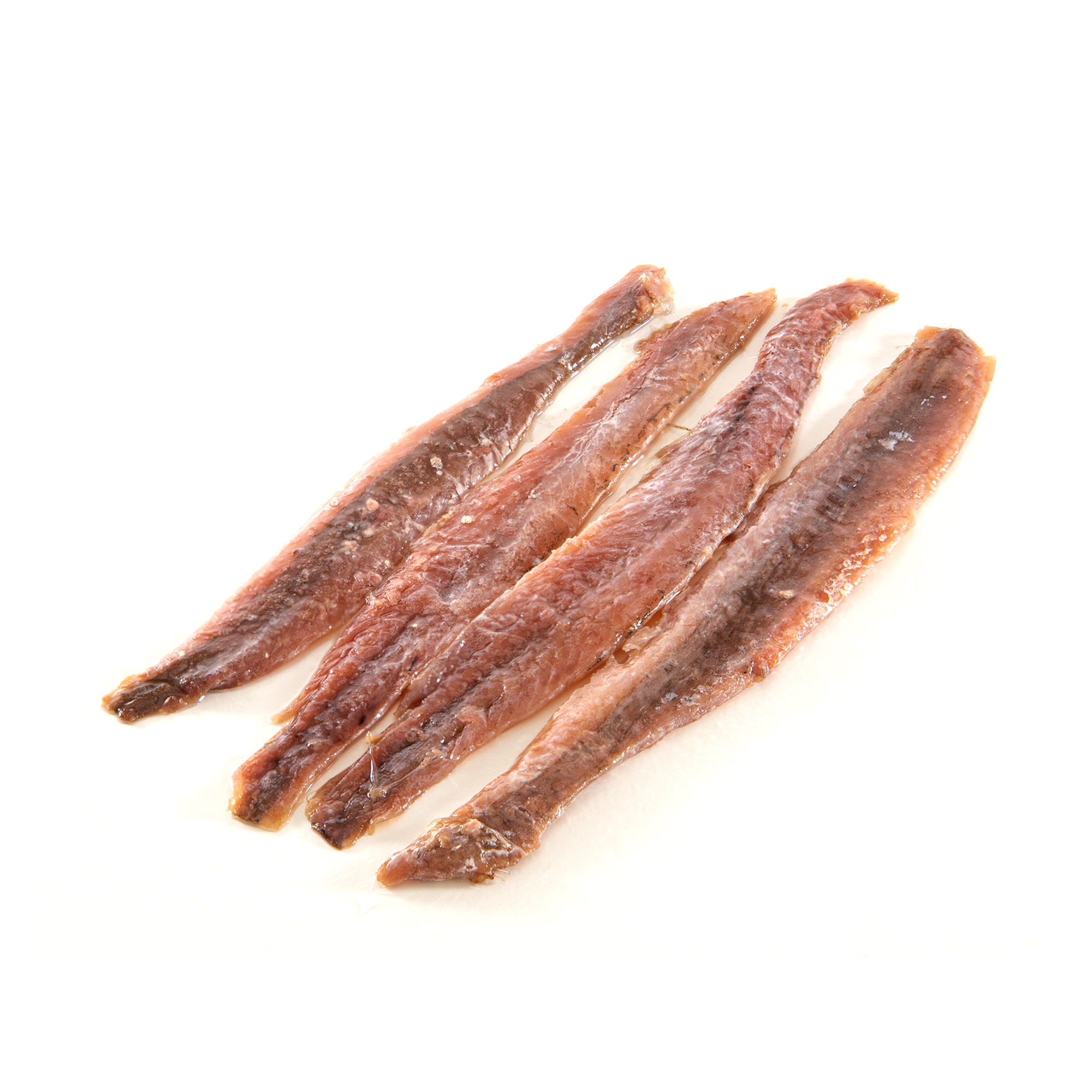
But, if you are looking for tradition, in our house we have a very tasty one around one of the most outstanding blue fish of the coast that has given rise to an excellent gastronomic product with name and surname: the anchovy from L'Escala, aromatic, tasty and with an intense taste. We are referring to the salting technique, which was used by the ancient Greeks: an ancient culture that is still very young. To make them, you only need fresh anchovies, salt, aromatic herbs and spices. And then they can be made in brine (with salt and salt water) or in oil (the anchovy is first melted and then preserved in oil), left to ripen for about 8 months and, that's it, ready to taste and enjoy the taste of the sea!
One way or another, the important thing is the nutritional contribution provided by eating oily fish. So, choose the variety you like best – but keep in mind that it is better to be sustainable and local fishing – prepare a fresh recipe and enjoy your outdoor holidays with an omega-3 shot that will help you strengthen your neurons before returning to work!
Anchovies from l'Escala.
Melon, watermelon and peach, the refreshing trident to withstand the heat
Author: Carme Melià
What
Welcome to Pagès La Festa
Everything is ready to start the seventh edition of the great farmers' festival, a complete experience of discovering the rural environment, with product tastings and the possibility of buying directly from producers. In addition to visits to participating farms, the program includes sixty complementary activities related to the primary sector and food such as fairs, talks, tastings... There is something for everyone, are you going to miss it?
Who
More than 150 agri-food farms
Different agricultural, livestock and fishing farms from all over the country participate in this initiative with free visits to its facilities. It is necessary to book in advance through the website benvingutsapages.cat. The visits, which include product tastings, allow you to know the origin of what they eat every day. In Benvinguts a Pagès La Festa also participate 160 rural lodgings with special proposals and 200 restaurants that cook with local products.
When
1 and 2 October
On the first weekend of October, the agri-food farms participating in Benvinguts a Pagès La Festa open their doors to publicize the origin of what we eat and promote the sale of local products. The novelty of this year is the possibility of prior reservation of visits. On the website you can make an exhaustive search of the available offer that, last year, had a participation of more than 32,000 people.
Find out more
Melon, refreshing slices
Melon, as we have said, is a fruit rich in water and low in sugars, it is an ideal moisturizing food, full of vitamin A -the more orange the pulp, the more beta-carotene it has- and minerals, such as potassium and magnesium. Maybe you like to eat it, simply, in bites, almost like sips of fresh water, but this fruit – well, vegetable actually, because melon belongs to the cucurbitaceae family, like zucchini, pumpkin and cucumber – is very versatile in cooking. You don't have to limit yourself to the popular melon with ham, you can also make an ultra-refreshing soup (or gazpacho, of course!), combine it with mint in a healthy and very fresh smoothie, add it to a summer salad or make ice cream, sorbet or iced drink, among many other proposals.
Cantalupe, frogskin, yellow, white, green, Gaul... White or orange pulp. There are many types of melons, you just have to choose the one you like the most. In our country, one with a name or surname is grown: the melon of Artesa de Segre. In fact, on the last weekend of August, this town of La Noguera hosts the Meló Fair, framed within the Sant Bartomeu Fair, specialized in dry melon, an autochthonous product of exceptional gastronomic qualities. It is a melon variety adapted to dry land crops in the regions of La Plana de Lleida: discover its characteristics in this link.
Artisan Segre Melon Fair.
Watermelon, water in bites
How do you prefer it, with or without seeds? Striped peel or rather dark? In one way or another, watermelon is the quintessential summer moisturizing fruit: eating a couple of cuts of it is practically equivalent to drinking a glass of water. Present in many summer gazpachos, although it can also be lightly grilled or grilled, eating it directly cut in the shape of a smiley mouth is the most common way to taste and enjoy it. And who doesn't smile with the freshness and hydration of eating it? Of course, it is better that you choose it very ripe, when it has the highest content of sugars, since otherwise it is tasteless and you will have a taste disappointment!
Refreshing, healthy, diuretic and depurative, watermelon is very versatile in the kitchen, as you can incorporate it into a multitude of sweet dishes, but also savory. Whether you decide to cook it or to eat it directly in smiling cuts, we leave you this link where you will find some places to buy very good watermelons.
Watermelon has a very high water content, is moisturizing and very healthy.
Peaches, fleshy or juicy
There are many colours (red, yellow, orange, white) and many varieties, but in our country there are mainly two types, water and vines. Rich in fiber and minerals, it is the third leg of the summer moisturizing trident. The peach has more calories than the other two fruits mentioned, but still in low proportion and that is compensated by its high hydration power. If we want to talk about peaches from our country with names and surnames, those of Ordal, those of the Ribera de l'Ebre and those of pinyana stand out.
You can taste and buy Ordal peaches every weekend in June, July and August, in Subirats (Alt Penedès), where the Ordal Peach Market takes place. It is a high quality peach with intense taste and aroma and depending on the variety, its meat can be of meatier texture or juicier. The best known variety is the vine peach, with an intense yellow colour, fleshy and sweet, with a small acid touch. It is one of the unique products of the Network Productes de la Terra.
The pineapple is a late peach, large in size, light color and strong flesh, which is grown in the area of Segrià and La Noguera. The first weekend of October, the Pinyana Peach Fair is held in Alfarràs, which this year will reach its 28th edition. As for the peach from Ribera d'Ebre, it has a powerful taste and is red in color. In this area, several varieties are grown: yellow pulp, white pulp, pavia and nectarines.
Whatever the variety of be, the peach can also be used in cooking, either to make desserts as good as this vine peach with sweet wine or in white meat dishes in a casserole or passing it through the pan or grill, with a touch of sugar. And, as we always say with fruit, you can take advantage of the high season -when they are better- to make homemade jams and jams to enjoy all year round.
But, you know, if you're thirsty these hot days, go for a sweet slice of melon, hydrate yourself with a watermelon smile with or without seeds or to cool off by nailing a good peach. You'll win the match in the heat by a score!
The Ordal Peach Market takes place on summer weekends in Subirats.
The festival of gastronomy and wines fills Mexico with Catalan flavors
Author: Carme Melià
What
Welcome to Pagès La Festa
Everything is ready to start the seventh edition of the great farmers' festival, a complete experience of discovering the rural environment, with product tastings and the possibility of buying directly from producers. In addition to visits to participating farms, the program includes sixty complementary activities related to the primary sector and food such as fairs, talks, tastings... There is something for everyone, are you going to miss it?
Who
More than 150 agri-food farms
Different agricultural, livestock and fishing farms from all over the country participate in this initiative with free visits to its facilities. It is necessary to book in advance through the website benvingutsapages.cat. The visits, which include product tastings, allow you to know the origin of what they eat every day. In Benvinguts a Pagès La Festa also participate 160 rural lodgings with special proposals and 200 restaurants that cook with local products.
When
1 and 2 October
On the first weekend of October, the agri-food farms participating in Benvinguts a Pagès La Festa open their doors to publicize the origin of what we eat and promote the sale of local products. The novelty of this year is the possibility of prior reservation of visits. On the website you can make an exhaustive search of the available offer that, last year, had a participation of more than 32,000 people.
Find out more
23 brands, 100 gourmet products
A wine tasting under the slogan Catalonia, where wine is culture, kicked off the Festival of Catalonia in Mexico which, throughout the month of July, promotes Catalan gastronomic products in the Central American country. The festival is born from the collaboration and the union of efforts of the Delegation of the Government of Catalonia in Mexico, El Palacio de Hierro and Prodeca in order to favor the presence of the Catalan agri-food sector in Mexico and promote commercial relations between both countries. It is an important and growing market for the Catalan sector, since according to data from Prodeca, agrifood exports to Mexico have grown by more than 33% in the last 10 years.
A total of 23 brands and more than 100 gourmet products made in Catalonia are responsible for positioning the country's gastronomic products in this strategic market through a commercial meeting point. Under the slogan Catalonia, where food is culture, Catalan products will be made known throughout the value chain of the Mexican market: buyers, importers, distributors and the media, among others.
In fact, these products reach the Mexican consumer through experiences with tastings and tastings, either of wines or gastronomic products, and also with the possibility of tasting typical dishes of Catalan cuisine, which can be purchased in the Food Corner of the establishments of the Palacio de Hierro.
A moment of wine tasting that served as a presentation of the promotional initiative.
An ancient taste discovery
The festival kicked off a few days ago by Catalan wine, with a tasting of up to 13 labels from the Priorat, Penedès, Cava and Terra Alta Designations of Origin. Ferran de León, CEO of D-CATA, and sommelier Ricardo Espindola, director of the Mexican School of Sommeliers, were in charge of guiding this first promotional activity through a gastronomic journey that followed the sea and the mountains of Catalonia.
The wine tasting was a taste tour to discover and understand the diversity of the territory, the climate of the country, as well as the versatility of its grapes: one of the best Mediterranean expressions of an ancient gastronomic culture. And no wonder, since the culture, tradition and landscape of wine are part of the history of Catalonia to the point of becoming one of the main gastronomic insignia of the country.
Currently, the Catalan wine sector enjoys iron health with a solid and competitive structure. With more than 600 bottling wineries, 8,359 winegrowers and an area registered in the Catalan DO of 42,822 hectares, the sector employs more than 25,900 workers, whether in the vineyard, wineries or the service sector.
Catalan wine is a benchmark product of Catalonia's food and wine culture.
Main gastronomic exports
Exports to Mexico of the Catalan wine and cava sector exceed 5.57 million euros. Even so, the so-called Fine Food products lead Catalan gastronomic exports to the Central American country: we are talking about vegetable juices, waters, beers, drinks and liquids, with 26.87 million euros; followed by snacks, snacks and bakery and pastry products (5.56 million euros), and finally ready meals, broths, broths, preserves, jams and jams (4.93 million euros).
The second category with the most exports is vegetable oils (mainly olive oil), while the meat and sausages sector occupies the third position. The Festival of Catalonia in Mexico is an opportunity for the Catalan agri-food sector to deepen and improve its positioning in the Mexican market in order to increase the number of product imports.
Catalan bakery and pastry products are highly appreciated by Mexican consumers.
Tomatoes, the great summer festival of colour, flavour and varieties
Author: Carme Melià
What
Welcome to Pagès La Festa
Everything is ready to start the seventh edition of the great farmers' festival, a complete experience of discovering the rural environment, with product tastings and the possibility of buying directly from producers. In addition to visits to participating farms, the program includes sixty complementary activities related to the primary sector and food such as fairs, talks, tastings... There is something for everyone, are you going to miss it?
Who
More than 150 agri-food farms
Different agricultural, livestock and fishing farms from all over the country participate in this initiative with free visits to its facilities. It is necessary to book in advance through the website benvingutsapages.cat. The visits, which include product tastings, allow you to know the origin of what they eat every day. In Benvinguts a Pagès La Festa also participate 160 rural lodgings with special proposals and 200 restaurants that cook with local products.
When
1 and 2 October
On the first weekend of October, the agri-food farms participating in Benvinguts a Pagès La Festa open their doors to publicize the origin of what we eat and promote the sale of local products. The novelty of this year is the possibility of prior reservation of visits. On the website you can make an exhaustive search of the available offer that, last year, had a participation of more than 32,000 people.
Find out more
A fruit that falls in love
It seems that not only do we like to navel-gaze, but we also like to eat it! For this reason, tomatoes, the navel fruit of the ancient Aztecs, is one of the most consumed vegetables in our country. We eat them throughout the year (they are grown in greenhouses), but when we really delight in its sweet taste and fleshy texture it is in summer, when it is time for real tomatoes, those that ripen in the sun and have the characteristic taste of a fruit that we fall in love with.
Tomatoes, with different varieties, are the joy of the season, with a seductive color and a culinary versatility that gives to fill more than one recipe book, either eaten raw or passed through the kitchen: in various salads such as this one of cod, to make juices and soups (starting with gazpacho, of course!, and continuing with a Menorcan olive water); in stir-fries and sauces (from romesco to homemade ketchup); dried, pickled, fried (as referred to in the title of the film Fried green tomatoes), roasted vegetables, stuffed with rice or vegetables, in a tartare, in a tempera cake ... And, of course, to juice the popular bread with tomato!
And why not?, take advantage of the exuberant summer tomato plants to make preserves and jams to enjoy the joy of summer all year round. In this link you will find addresses where to find some of the best tomatoes that are made in Catalonia.
The bread should be juiced with a well-ripe and tasty tomato.
A thousand and one varieties, and more in the process of recovery
Of course, before buying them, you may need to remember and think about which of the many varieties of tomato is the most suitable for the dish you want to prepare. Because, there are all kinds of tomatoes and for all tastes: hanging or tomato (essential for bread with tomato), rose (intense and very aromatic), Montserrat (ideal for stuffing!), cherry or cherry (yellow or red, they are healthy candies, we cannot resist eating them one by one!), green, oxheart (early and fleshy), Cabrianes, horn, long, Bages, raf, pear, Benach, Vallés Oriental, Collserola mandó, kumato, Maresme apple, green zebra...
There are so many varieties, that it is even said that each farmer had his own. Whether true or not, what is clear is that there are different initiatives throughout the territory that seek to recover old varieties, which have been left aside for more productive ones. This is the case of Les Refardes, a cooperative in Mura, in Bages, which works as a seed bank and prioritizes recovering varieties rooted in the territory, without excluding those from other places. Or Esporus, a project of the association L'Era, Espai de Recursos Agroecològics to collect, recover and preserve seeds of local or traditional varieties.
In summer, tomatoes taste like tomatoes.
Singular and festive
Like the pomelo of the Maresme, the of Vallès Oriental and the Collserola mandó, the Bages tomato , is one of the unique products of the Xarxa Productes de la Terra, due to its unique characteristics that distinguish it from the rest and for being rooted in a specific territory where it is produced. It is the star of the garden of its region and even has its own party. A proposal that reaches its sixth edition and that will take place very soon, from July 18 to 23 in Manresa.
The Bages Tomato Festival includes tastings, tastings, visits to producers, workshops and a central event that is the Tomato Market, which on Saturday 23rd will concentrate different producers on Passeig Pere III in Manresa who will offer their products. Grown in the Montcau valleys, the Bages tomato is hollow inside and has a slightly sweet and refreshing taste. Also known as Montserrat tomato, it has several subspecies such as the pink tomato of the Cardener or the pink of Mura, each with a very marked personality.
And being tomato territory as we are, this could not be the only festival dedicated to red vegetables. Santa Eulàlia de Ronçana, in the Vallès Oriental, will also soon celebrate the twelfth Tomato Fair: on July 23 and 24, at the Civic and Cultural Center La Fàbrica from 9 a.m. to 2 p.m., with workshops, visits to the garden, tastings of old varieties and the presentation and tasting of Thermal gazpacho, made with mineral-medicinal waters from Caldes de Montbui and local tomatoes. Check all the details of the program in this link.
But if you want to lead by example, then your date is the gastronomic days. Tomato al plat, from July 8 to 24, gives you the option to taste in the restaurants of Santa Eulàlia de Ronçana the dishes made with tomatoes of local varieties from the producers of the municipality and the region. On the other hand, you can opt for the Tomato Gastronomic Days, from July 22 to 31, with dishes made with tomatoes from the orchards of Caldes de Montbui.
Various options to celebrate with the great summer vegetable without fear of turning red like a tomato!
A taste of a previous edition of the Bages Tomato Festival, in Manresa.
Mussels, the marine treasure of the Ebro Delta
Author: Carme Melià
What
Welcome to Pagès La Festa
Everything is ready to start the seventh edition of the great farmers' festival, a complete experience of discovering the rural environment, with product tastings and the possibility of buying directly from producers. In addition to visits to participating farms, the program includes sixty complementary activities related to the primary sector and food such as fairs, talks, tastings... There is something for everyone, are you going to miss it?
Who
More than 150 agri-food farms
Different agricultural, livestock and fishing farms from all over the country participate in this initiative with free visits to its facilities. It is necessary to book in advance through the website benvingutsapages.cat. The visits, which include product tastings, allow you to know the origin of what they eat every day. In Benvinguts a Pagès La Festa also participate 160 rural lodgings with special proposals and 200 restaurants that cook with local products.
When
1 and 2 October
On the first weekend of October, the agri-food farms participating in Benvinguts a Pagès La Festa open their doors to publicize the origin of what we eat and promote the sale of local products. The novelty of this year is the possibility of prior reservation of visits. On the website you can make an exhaustive search of the available offer that, last year, had a participation of more than 32,000 people.
Find out more
Beyond the appetizer
Mussels are a very good seafood, gastronomically speaking, but they are also a very good source of high quality protein and one of the richest foods in iron of easy absorption, with a low content of fats and calories. Great for the bikini operation!
If you want to eat them, we give you a list of restaurants where they prepare very good ones. But if what you want is to cook them at home, you should know that they can be prepared in many ways, although often you simply have to steam them for a few minutes (do not go with water, they only need a few tablespoons and a few minutes of cooking) with a drizzle of lemon and you will have a starter or a delicious snack.
Mussels are a very versatile food in the kitchen, as they can also be prepared battered (known as tigers), in vinaigrette, juice, pickled, baked, in grilled pans, etc. And even accompany them with blonde potatoes!, as they do in Belgium, where this seafood is a national dish: moules et frites. Oh, and since we are fans of harnessing cuisine, do not throw away the cooking water of the mussels, it is ideal to enrich a rice or other seafood dish.
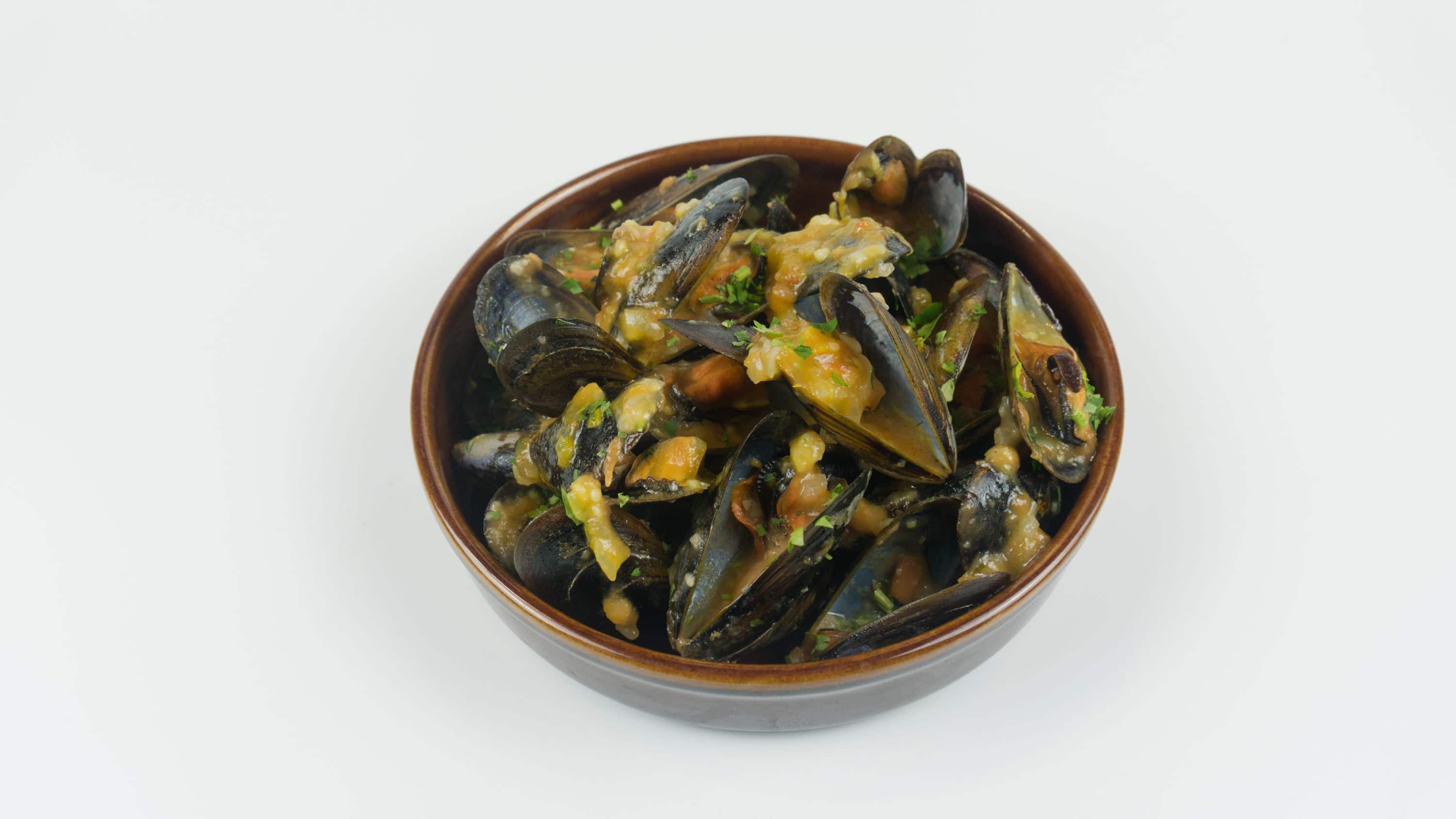
Do you want to ensure victory in the table? Well, first make sure that the raw material is of quality: buy the mussels alive, smelling of the sea and well closed. Then, already in the kitchen, start with a typical and very popular, but delicious recipe - mussels a la marinera. There are as many versions as there are cooks or like grandma's macaroni recipes, but whatever you do, above all, don't stop dipping bread!
Mussels a la marinera - a tasty and popular dish.
From the Ebro Delta to your plate!
In our country, the native mussel is the one that is bred in nurseries in the Ebro Delta. The confluence of sea and river waters makes the organoleptic characteristics of this mollusk especially outstanding: it has a special taste between sweet and marine, with muscled flesh and more tissue.
Although it is found all year round, the summer months are when they are at their best. Therefore, during the month of July, sixteen restaurants and bars in Deltebre (Baix Ebre) participate in the Mussel Gastronomy Days, an initiative of the City Council with the collaboration of the Federation of Commerce and Tourism (Fecotur), which wants to value the cuisine and products of the territory. You can check the participating menus and establishments here. As part of the Gastronomic Days, on Thursday, July 28, the Mussel Night will also take place in Plaça Europa in Riumar, with tastings of this mollusc, accompanied by live music.
However, Deltebre is not the only town that pays tribute to this seafaring delight, since the Cases d'Alcanar (Montsià) host from 12.30pm on Saturday 30 July, in the port area, a new edition of the Ebro Delta Mussel Day, organized by the Les Cases Commission of Entities and aimed at showing the gastronomic qualities of the mollusc. Hundreds of kilos of steamed mussels are distributed among attendees, who can pair them with DO Terra Alta wines.
In the mussel farms where the mollusk is produced, you can make routes to discover and taste the mussels and oysters of the Ebro Delta.
Local seafood
The mussel of the Ebro Delta, in addition to being a successful local product, is also a tourist attraction in the area with the possibility of taking guided tours to discover the production and aging process of this mollusk and to taste it in the sea in the mussel beds, such as those of Aví Agustí (created in the 80s, it was the first mussel farm that could be visited) or that of the Musclarium (one of the largest in the Delta).
And not only mussels live the Ebro Delta! In the bays of Fangar and Alfaques, other very good seafood such as curly oyster and clams are also grown. Delta oysters have fine, tasty meat, and two spices are grown from clams; the japonica and the fine. Another of the local products is the galera, a quality crustacean, very typical of the area, so much so that it even has its own gastronomic day in the months of February-March, where it becomes the protagonist of the menus of the surrounding fishing municipalities.
Seafood as we can see is a whole world (or a whole sea, rather!) and there is so much variety that it allows us to eat in a healthy and varied way. As the Fishmongers' Guild of Catalonia explains, eating food has many benefits for the body, so we enjoy the variety and diversity offered by these local products, especially during the summer months. Long live the shell!
Oysters from the Ebro Delta.
It's time for pears, early, small and crunchy bites
Author: Carme Melià
What
Welcome to Pagès La Festa
Everything is ready to start the seventh edition of the great farmers' festival, a complete experience of discovering the rural environment, with product tastings and the possibility of buying directly from producers. In addition to visits to participating farms, the program includes sixty complementary activities related to the primary sector and food such as fairs, talks, tastings... There is something for everyone, are you going to miss it?
Who
More than 150 agri-food farms
Different agricultural, livestock and fishing farms from all over the country participate in this initiative with free visits to its facilities. It is necessary to book in advance through the website benvingutsapages.cat. The visits, which include product tastings, allow you to know the origin of what they eat every day. In Benvinguts a Pagès La Festa also participate 160 rural lodgings with special proposals and 200 restaurants that cook with local products.
When
1 and 2 October
On the first weekend of October, the agri-food farms participating in Benvinguts a Pagès La Festa open their doors to publicize the origin of what we eat and promote the sale of local products. The novelty of this year is the possibility of prior reservation of visits. On the website you can make an exhaustive search of the available offer that, last year, had a participation of more than 32,000 people.
Find out more
The purest flavor
With the arrival of San Juan pears to the market, we start the summer and season of this fresh fruit. They are small, early pears that 'I think' when you nail them bite. Sweet, pure taste and very tasty, they come from crops in Tarragona and Lleida. Although they are usually eaten directly – they do not need to be peeled – you can also use them on the stove to make very good recipes, such as the typical and delicious pears in wine, or also as a garnish for chicken or beef stews, and, of course, also in desserts such as salad, jams or fruit cakes.
This variety, however, is only one of the many that can be found, since pear is a very common sweet fruit in Catalonia and has many varieties, of different colors, textures and flavors (Ercolina, Blanquilla or water, Williams, Lemonera, Conference, Forest, Magallona, Alexandrina...) and even has a specific PDO: the PDO Pera de Lleida. And no wonder, since, according to data from 2020, Catalonia is the 18th world producer of pear, with the European Union being the natural market for export. In short, a fruit that is the repera of good and varied!
Lleida pears are the sweetest on the market
The sweetest
If those of Sant Joan are the smallest, those of the DOP Pera de Lleida are the sweetest. And also the more rounded and with the peel of a warmer green color. The pears of the PDO are of three different varieties: the Lemon (which is harvested from July to November), the Blanquilla (from August to February) and the Conference (from September to June).
The Lemon pear has a sweet taste and grainy texture, with a smooth, thin peel and colour between green and yellow. La Blanquilla is the juiciest and most refreshing, with thin and smooth peel, and grayish green, with a sweet and refreshing taste. The conference has a thick, yellowish-green peel, is juicy and sweet.
Currently, pears are the most important sweet fruit crop in the area. Do you want to know more? You will find more information here.
Pear is one of the most consumed sweet fruits in our country
Juicy and meaty, for all kinds of dishes
Another pear with a name and surname is that of Puigcerdà which, after years of decline, is being marketed again, although still in a very limited way and above all for local consumption. It is, however, a renowned pear, which was already cultivated in the Middle Ages and was considered a worthy gift for knights and important figures who visited the town.
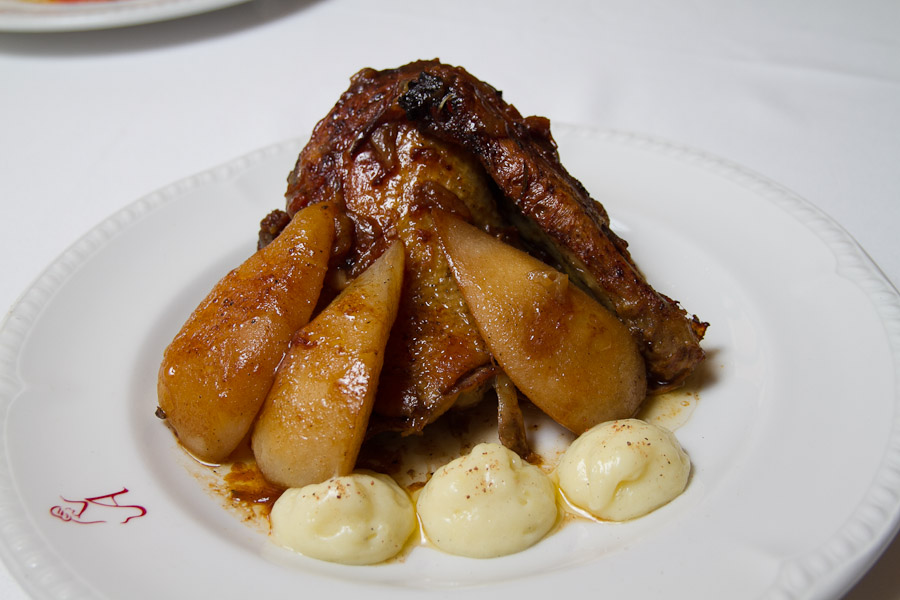
This is the pear variety Doyenné de comice, a pear with a fine, tasty, fragrant and sweet pulp. A very traditional recipe from the Cerdanya region linked to this product is duck with pears, although Puigcerdà pear is also consumed fresh or in all kinds of sweet dishes.
The pear is a fruit, juicy and fleshy, with many nutritional properties, satiating effect due to its high fiber content, moisturizing, easy and healthy digestion, its consumption provides very few calories. Although they are usually eaten directly, there are many recipes, sweet and savory, in which they are a remarkable ingredient. Do not hesitate to try some of them, they are energetic and tasty dishes.