Black mountain turnip
Originally, it was a product grown in farmhouses as a subsistence resource, which used to end up in some stew. Today, it is a prestigious product, appreciated for its delicate taste.
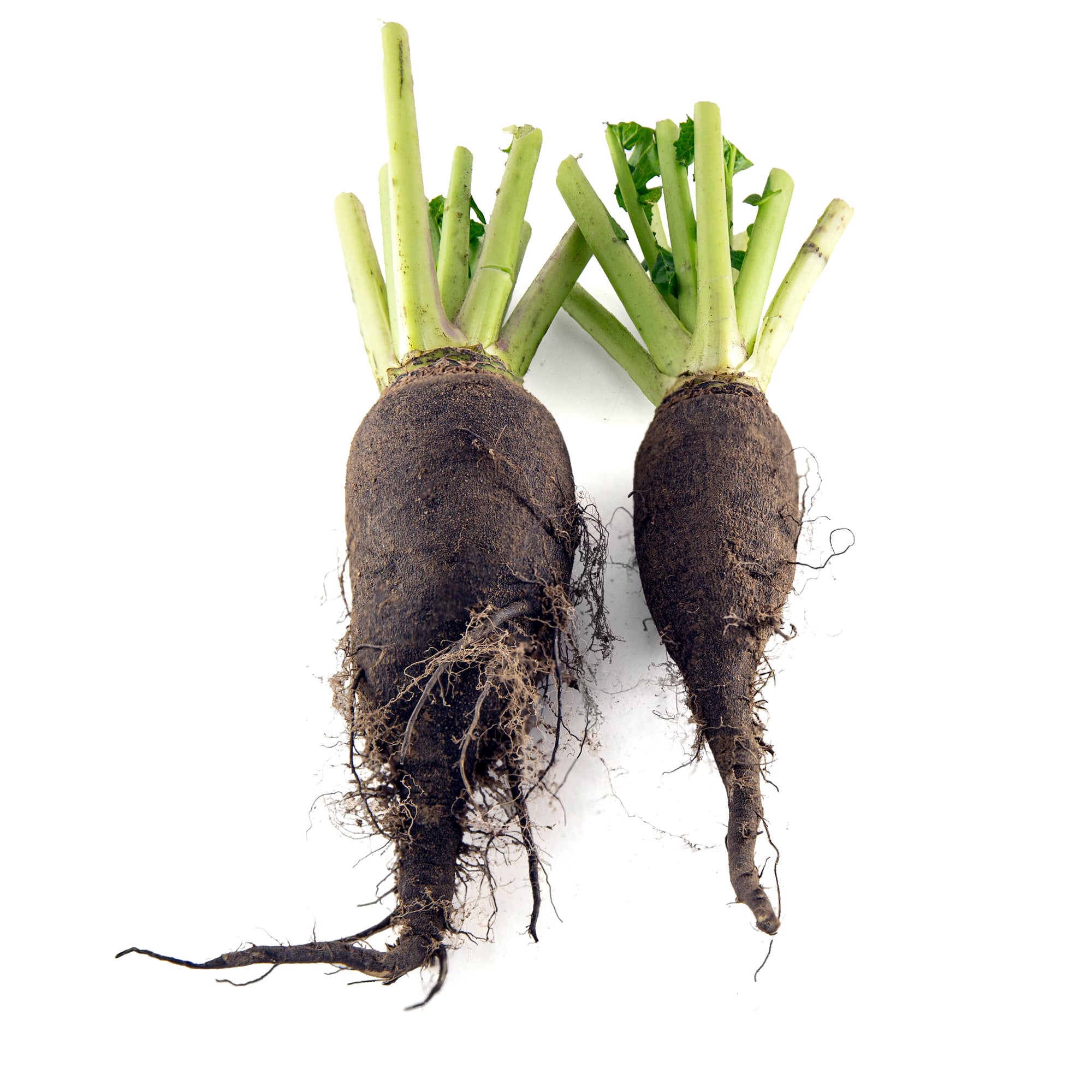
The black turnip is a tuber of the cruciferous family, with black skin and whitish flesh. It is long and thin, about 20 cm long. It is well adapted to cold weather and drought, so it does not need to be watered. It is finer and tastier than other varieties of turnips. It has multiple culinary applications: it is consumed boiled, seasoned, pickled, stewed with pig's trotters or rib...
-
 Productes de la terra
 Vegetables and mushrooms



Season calendar
- GEN
- Feb
- Sea
- Apr
- Never
- JUN
- JUL
- AUG
- THIRST
- OCT
- nov
- From
Complementary information
It can be found in greengrocers in the area, in season.
Attributes and nutritional properties
The turnip is a vegetable that, like the rest, provides little energy, since its main component, more than 90%, is water and provides only about 5% of carbohydrates. It is rich in fibre and, therefore, regulates intestinal transit. Although its content is not the highest, it also provides a wide variety of vitamins and minerals, such as vitamin C and folic acid, or potassium and phosphorus. These nutrients are completely necessary for good growth and physical and mental development.