
Administration
-
Catalan Food Safety Agency
The Catalan Food Safety Agency (ACSA) is an autonomous body attached to the Department of Health, which aims to achieve the highest degree of food safety in Catalonia through the planning and coordination of control actions, with the collaboration and cooperation of the different public administrations and sectors whose activity has an impact, directly or indirectly, on food safety.
The Catalan Food Safety Agency (ACSA) is a specialized area of the Public Health Agency of Catalonia, which aims to achieve the highest degree of food safety in Catalonia, through the following lines of work:
- Assessing and communicating food-related health risks.
- Support for the coordination of the actions of the Catalan public administrations responsible for food safety.
- The promotion of collaboration between public administrations, universities and research centres, industrial sectors and consumer and user organisations.
- Strategic planning and monitoring of the food security situation in Catalonia.
ACSA's values are transparency, independence, scientific excellence and participation.
Ensuring the highest level of health and food safety among the Catalan population is a shared responsibility. The bodies related to food safety of the Generalitat and local entities in Catalonia collaborate with the ACSA, as well as all representatives of economic agents, professionals and consumer associations.
- http://acsa.gencat.cat/ca/inici
-

Catalan Tourism Agency (ACT)
The Catalan Tourism Agency (ACT) is the body of the Government of the Generalitat de Catalunya responsible for carrying out tourism promotion policies. Since the beginning of 2010 , it has replaced the former Turisme de Catalunya consortium, which until then had been responsible for this task.
- http://act.gencat.cat/
-
Catalan Food Council
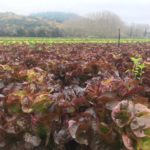
Website of the Catalan Food Council.
The Catalan Food Council is the body for participation and collaboration, debate and advice, consultation and proposal in the field of agri-food and will lay the foundations for a new national food policy based on local food production and sustainable environmental management.
It is attached to the Department of Agriculture, Livestock, Fisheries and Food (DARP), and acts as a forum for analysis, debate and proposals on issues related to the country's agri-food policies and also acts as an agri-food observatory to propose the necessary measures to take advantage of all market opportunities and to offer the best conditions of quality and sustainability.
The Catalan Food Council proposes actions with the following objectives:
- Continue to promote food quality and safety
- Promote Catalan food products , including those of differentiated quality, those from close proximity and those produced organically
- Promote balance, transparency and positive synergies throughout the food chain
- Promote sustainability, social responsibility and the fight against food waste
- Promote the Mediterranean diet and encourage healthy eating habits among citizens.
The Council is made up of a broad representation of associations and entities related to food in Catalonia, from consumers to the most representative agricultural professional organizations, institutions and related professional associations.
- http://agricultura.gencat.cat/ca/ambits/alimentacio/consell-catala-alimentacio/
-
Catalan Council for Organic Agricultural Production
Website of the Catalan Council for Organic Agricultural Production
The Catalan Council for Organic Agricultural Production (CCPAE) is the control authority of Catalonia and its function is to audit and certify organic agri-food products in our country.
The CCPAE is a public law corporation with its own legal personality. This body is administratively supervised by the Department of Agriculture, Livestock, Fisheries and Food of the Generalitat de Catalunya.
The Council appears on the list of public authorities and control bodies published annually by the European Union.
The CCPAE is made up of several bodies: the governing body, the executive body and the operational body.
The governing body is the Governing Board, which makes decisions that affect the proper functioning of the Council. This is the highest body of the CCPAE.
The Governing Board is composed of 12 members: three from producers, three from processors, three from consumers and three from the Administration, of which one is elected president. The objective is to achieve the parity of interests marked by the UNE-EN ISO/IEC 17065:2012 Standard.
The executive body is the one that executes the decisions of the Governing Board through the Technical Director and the Certification Committee. The latter is made up of a qualified technician from the Administration and two certifying technicians from the CCPAE.
Regarding the operational bodies, these are divided into several areas that depend on the Technical Management: the inspection area, the certification area, and the general affairs area, which includes the Quality Area, the Economic-Financial Area and the Technical Communication Area.
- http://www.ccpae.org/
-
Catalan Council of Integrated Production
The Catalan Council for Integrated Production is a public law corporation responsible for the management of integrated production. It has legal personality, economic autonomy and full capacity to act to fulfil its functions.
- https://producciointegrada.cat/
-
Catalan Federation of Quality Food Producers
Non-profit organization that brings together the majority of the DOP-IGP Regulatory Councils of Catalonia. This represents more than 154 companies, almost all cooperatives that, at the same time, employ about 4,000 people and that, based on the day-to-day work of the more than 16,000 farmers and stockbreeders who produce local products, representing products that have obtained the highest quality certification granted by the EU to a food.
- http://www.alimentsdorigen.cat/
-
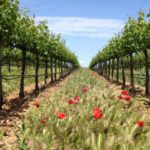
Catalan Institute of Vine and Wine (INCAVI)
INCAVI, the Catalan Institute of Vine and Wine, is a specific institute for the wine sector created by the Department of Agriculture, Livestock, Fisheries and Food of the Generalitat de Catalunya. This institute carries out studies and research that facilitate the development of the wine industry sector. In addition, INCAVI works on the promotion of Catalan wines and the regulation of the wine sector.
INCAVI organizes continuing education, specialization and recycling activities for technicians and professionals in wine and oenology, from technical aspects to management and marketing.
They teach courses to consumers and organize specialization and recycling courses for technicians and professionals in the field of viticulture and enology. INCAVI collaborates with universities and other research centers.
- http://incavi.gencat.cat/ca/
-

Xarxa de Productes de la Terra
The Earth Products Network is a voluntary grouping of 12 local entities at a supramunicipal level promoted by the Barcelona Provincial Council in 2010, which brings together more than a thousand companies producing and processing quality food products in the Barcelona region. The main objective of the Network is to strengthen this business fabric, so that companies are more competitive and sustainable, and territories are more attractive and of quality.
Through the local entities that are members of the Network, they support companies in these areas:
• In business management: training and advice in all areas of business management: procedures, regulations, application and management of subsidies.
• In production processes: training and advice on food quality and safety, agri-food transformation, certifications, designations of origin, conversion to organic farming, technological and productive innovation.
• Marketing: market knowledge and strategy, customer loyalty, marketing platforms and systems. Promotion of collaboration strategies with the catering sector, gastronomic campaigns, participation in specific or generic fairs, promotional campaigns, production of catalogues and presence on the Internet.
• Cooperation between companies: promotion of processes for the establishment of associations and promotion of cooperation projects between companies.
On the other hand, the Network has drawn up a list of 55 unique products, which have their own and exceptional characteristics, often rooted in a very specific region or territory.
- https://xarxaproductesdelaterra.diba.cat/
see more