Sheep sawn cheese
Serrat cheese is traditional in the Pyrenees, recovered by its producers in recent years and marketed as an artisan cheese.
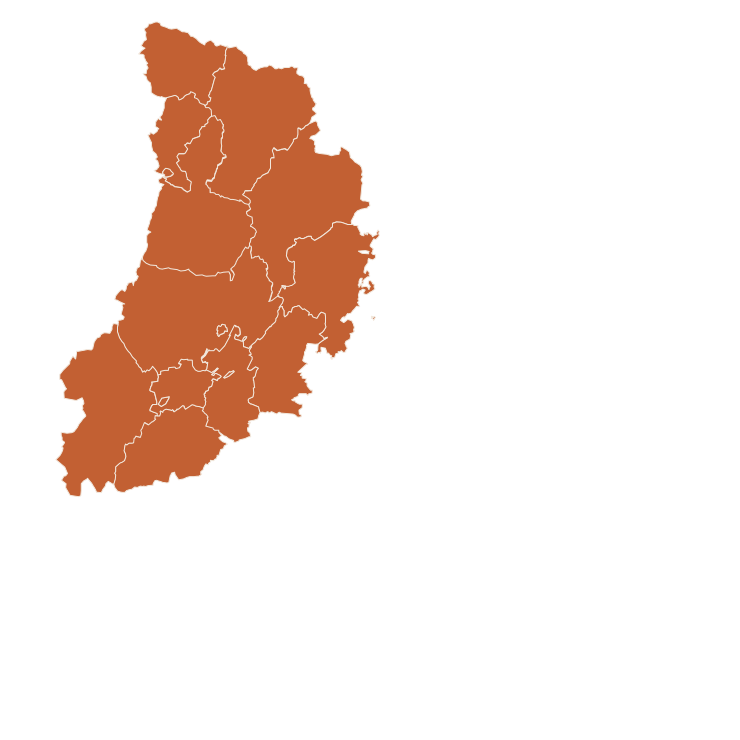
Serrat cheese is, together with "formatge tupí" one of the most preserved its similarities with the traditional cheeses of the Pyrenean mountains. In ancient times, this cheese was made between spring and the beginning of summer, from May to the end of June, and was obtained from the milk of sheep of native breeds, such as ripollesa sheep. Currently, several producers have chosen to make this sawn cheese in an artisanal way, once traditional techniques have been adapted to be used for marketing.
-
 Productes de la terra

 Cheeses and dairy products
Territory
- Alt Camp
- Alt Empordà
- Alt Penedès
- Alt Urgell
- Alta Ribagorça
- Anoia
- Bages
- Baix Camp
- Baix Ebre
- Baix Empordà
- Baix Llobregat
- Baix Penedès
- Barcelonès
- Berguedà
- Cerdanya
- Conca de Barberà
- Garraf
- Garrotxa
- Gironès
- Les Garrigues
- Maresme
- Moianès
- Montsià
- Noguera
- Osona
- Pallars
- Pallars Sobirà
- Pla d'Urgell
- Pla de l'Estany
- Priorat
- Ribera d'Ebre
- Ripollès
- Segarra
- Segrià
- Selva
- Solsonès
- Tarragonès
- Terra Alta
- Urgell
- Val d'Aran
- Vallès Occidental
- Vallès Oriental



Labels
Season calendar
- GEN
- Feb
- Sea
- Apr
- Never
- JUN
- JUL
- AUG
- THIRST
- OCT
- nov
- From
Complementary information
It is sold in pieces of 1/2 kg and 1 kg. Part of the marketing is done through direct sales at the place of production, on request and is also distributed to specialized stores, especially in the Pyrenees and Pre-Pyrenees. It is eaten alone, with bread, with other cheeses or with other products, such as fruit, salads and also grated on red meats.
Attributes and nutritional properties
It is a cylindrical cheese, with angular or slightly rounded edges. The skin is thin, between yellowish and brownish, while the inside is yellow. The mass is compact and consistent and, as the name suggests, is "sawn" (eyeless). It is fragrant and intensely flavoured, slightly spicy when it reaches a certain degree of ripeness. It is eaten semi-dry or dry. To make it, you have to put sheep's milk in the refrigeration tank, and then transfer it to a curdling tank. This tank is heated to 34-36ºC, animal rennet is used and milk ferments are added. Once this is done, it is left to rest, and when it has set it is cut and the whey is removed. Then it is put on a cloth, which acts as a strainer, and placed in the molds. The next step is to press it, then it is salted and allowed to dry. Finally, it is left to mature in the winery or ripening chamber for at least two months if it is made with raw milk or for a month if it is made with pasteurized milk.