Fresh cheese
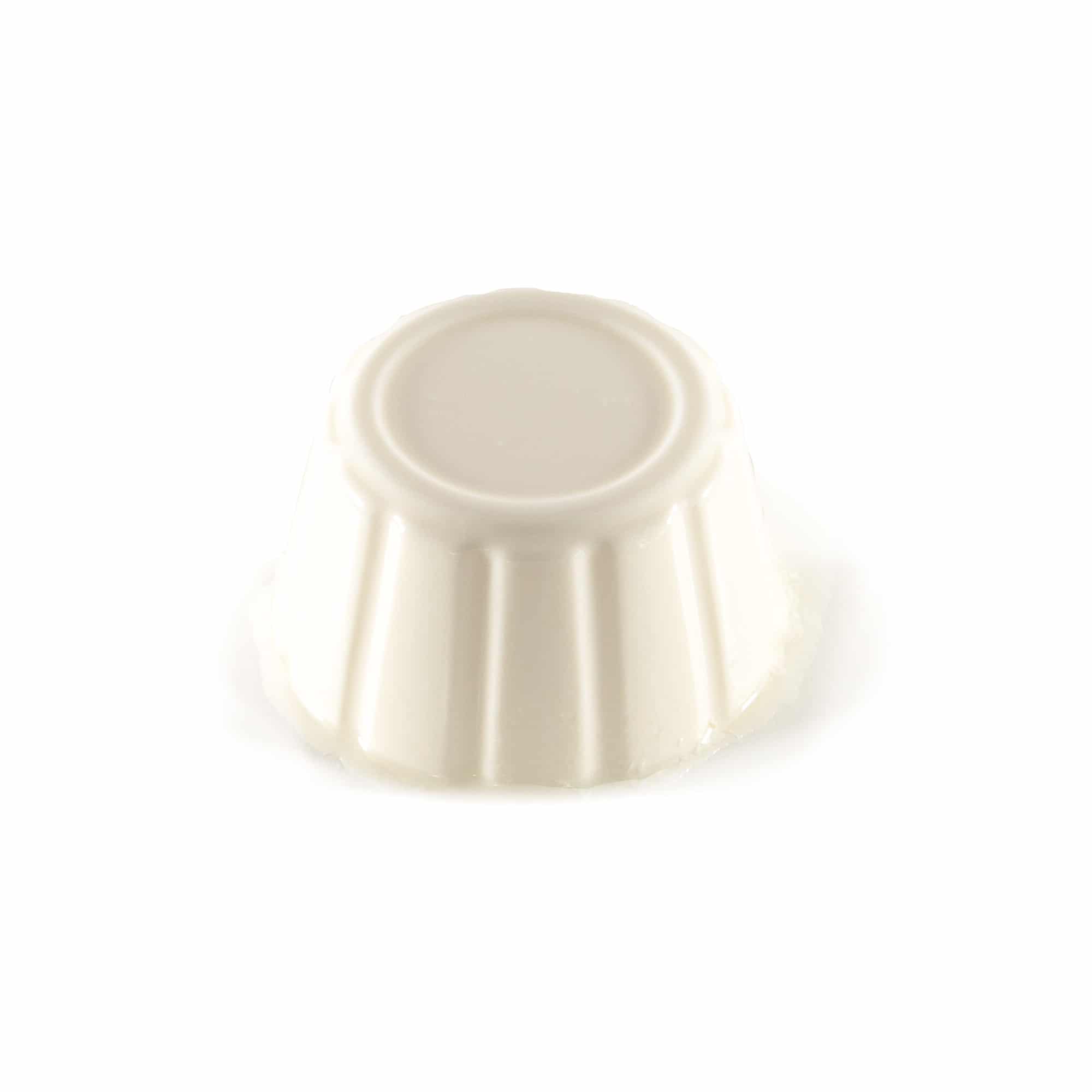
Fresh cheese is cheese obtained from the coagulation of milk, without the addition of ferments, usually with animal rennet, and which has not been pressed or, almost ever, salted. Therefore, it is a moist and milky cheese of short duration.
It is made with pasteurized milk from cow, goat or sheep, to which rennet and calcium chloride are added at a temperature of 30-36 ºC. The formation of curds lasts at least half an hour, and never a very long time, since you want to obtain a compact curd but not hard. The curd is cut and allowed to drain to mould it and, in the mould or in the final container, take it to refrigeration at 4ºC. Salt may or may not be added.
It must be stored at low temperatures, between 2º and 4ºC (otherwise, it becomes sour) and can last up to about eight days. Before eating it, take it out of the fridge, until it reaches about 15ºC. Being a cheese with a mild flavor and low fat content, it integrates well in salads, but also in filling with pasta, sauces or healthy and nutritious breakfasts.
-
 Productes de la terra
 Cheeses and dairy products
Territory
- Alt Camp
- Alt Empordà
- Alt Penedès
- Alt Urgell
- Alta Ribagorça
- Anoia
- Bages
- Baix Camp
- Baix Ebre
- Baix Empordà
- Baix Llobregat
- Baix Penedès
- Barcelonès
- Berguedà
- Cerdanya
- Conca de Barberà
- Garraf
- Garrotxa
- Gironès
- Les Garrigues
- Maresme
- Moianès
- Montsià
- Noguera
- Osona
- Pallars
- Pallars Sobirà
- Pla d'Urgell
- Pla de l'Estany
- Priorat
- Ribera d'Ebre
- Ripollès
- Segarra
- Segrià
- Selva
- Solsonès
- Tarragonès
- Terra Alta
- Urgell
- Val d'Aran
- Vallès Occidental
- Vallès Oriental




Labels
Season calendar
- GEN
- Feb
- Sea
- Apr
- Never
- JUN
- JUL
- AUG
- THIRST
- OCT
- nov
- From
Complementary information
It is sold in cheese shops and many other types of retailers throughout Catalonia.
Attributes and nutritional properties
Fresh cheese has, in concentrated form, most of the nutrients in milk. Its main components are proteins and fats, although the latter are found in smaller proportions than in matured cheeses. It is a good source of phosphorus, which is part of DNA, and zinc, which intervenes in the functioning of taste and smell, as well as calcium, important for the proper formation of bones and teeth. As for vitamins, it provides a large amount of vitamin A, necessary for the proper functioning of the nervous system, and other B vitamins, essential for the proper functioning of the body.