Lamb
The lambs covered by this distinction come from breeds included in the official catalog, bred under controlled conditions that favor the production of meat of superior quality.
These lambs can come from the farm where they will also be fattened, in which case it is indicated on the label "herd lamb", or fattened on another farm, in which case it reads "fattening lamb". The feed of the herd lamb will be exclusively of top quality feed, as well as straw and fodder, and breast milk. In the case of fattening lamb, the animal must have entered the farm between four and seven weeks of life, and must have a fattening period of more than 30 days, only with top quality feed. The meat of these lambs is tastier and better resists cooking due to its consistency.
-
 Marca Q de Qualitat Alimentària
-
 Productes de la terra
 Meat and sausages
Territory
- Alt Camp
- Alt Empordà
- Alt Penedès
- Alt Urgell
- Alta Ribagorça
- Anoia
- Bages
- Baix Camp
- Baix Ebre
- Baix Empordà
- Baix Llobregat
- Baix Penedès
- Barcelonès
- Berguedà
- Cerdanya
- Conca de Barberà
- Garraf
- Garrotxa
- Gironès
- Les Garrigues
- Maresme
- Moianès
- Montsià
- Noguera
- Osona
- Pallars
- Pallars Sobirà
- Pla d'Urgell
- Pla de l'Estany
- Priorat
- Ribera d'Ebre
- Ripollès
- Segarra
- Segrià
- Selva
- Solsonès
- Tarragonès
- Terra Alta
- Urgell
- Val d'Aran
- Vallès Occidental
- Vallès Oriental



Labels
Season calendar
- GEN
- Feb
- Sea
- Apr
- Never
- JUN
- JUL
- AUG
- THIRST
- OCT
- nov
- From
Complementary information
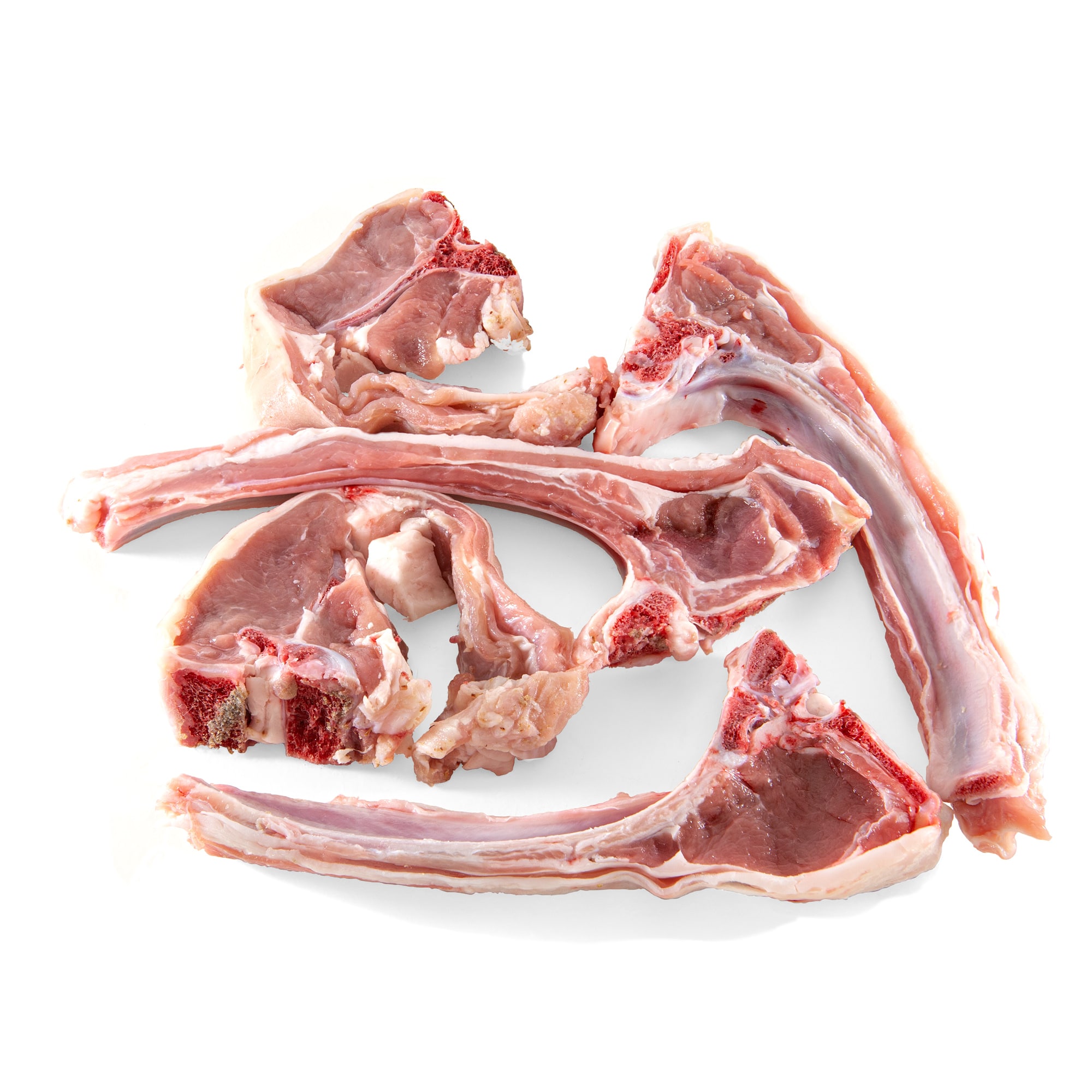
The carcasses are sold in butcher shops throughout Catalonia, conveniently certified in all forms of presentation: whole, in pieces (thigh, shoulder and ribcage, preferably), or filleted and packaged.
Attributes and nutritional properties
Lamb meat can be considered red or white depending on the age and diet received by the animal. It is one of the animals with the highest percentage of fat, concentrated in some parts such as ribs, which is mainly saturated. In young animals, it concentrates under the skin and can be easily removed; In contrast, in larger animals, it is found among muscle tissue. Like other meats, it is a good source of good quality protein, vitamins B12 and B2 and minerals such as iron, phosphorus and zinc.