Cloth annealing
Like curd, this fresh cheese, well differentiated from any other cheese in this family, is represented by a name of popular knowledge and designation. Its production currently follows the traditional process and, although its basis is the production of cottage cheese, the finish varies greatly from one cheesemaker to another.
A cottage cheese is made so that, after cutting the curd, cause a long drain, which leaves a curd that, once manipulated in the style of each producer (whipped, mixed with xerigot ...), can be molded into the rags. It must then be refrigerated at 4ºC. The most unique feature of these products today is that we will always find them on the market wrapped in a cellulose cloth that maintains their shape and allows them to drain and eliminate xerigot. As it is a fresh product, it needs low storage temperatures (temperatures from 2 to 4ºC, otherwise the taste becomes sour), for about five days.
Drap annealing is soft, unctuous and milky in taste. It is advisable to eat it with sugar, honey or candied fruit, especially figs. In the kitchen it can be served in the preparation of ice creams or creams associated with desserts.
-
 Productes de la terra

 Cheeses and dairy products


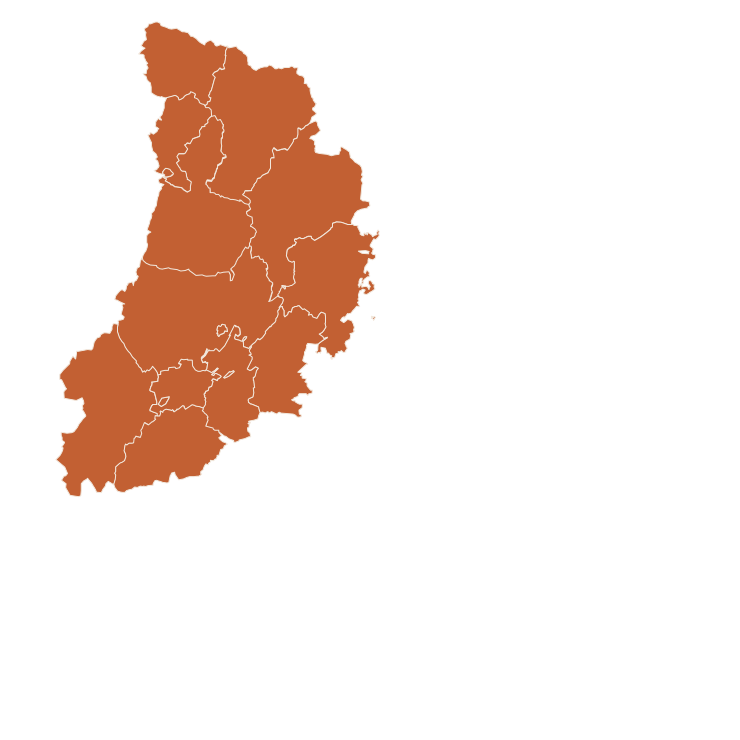

Season calendar
- GEN
- Feb
- Sea
- Apr
- Never
- JUN
- JUL
- AUG
- THIRST
- OCT
- nov
- From
Complementary information
It is sold throughout the year in cheese shops near the production area.
Attributes and nutritional properties
Curd has, in a concentrated way, most of the milk nutrients. Its main components are a very high quality proteins and fats, although the latter are in less proportion than in cheese. It is a good source of phosphorus, which is part of the DNA, and zinc, which intervenes in the functioning of taste and smell, as well as calcium, essential for the proper development of bone structures. As for vitamins, it provides a large amount of vitamin A, necessary for the proper functioning of the nervous system, and other vitamins of group B, essential for the proper functioning of the body.