Kidney bull
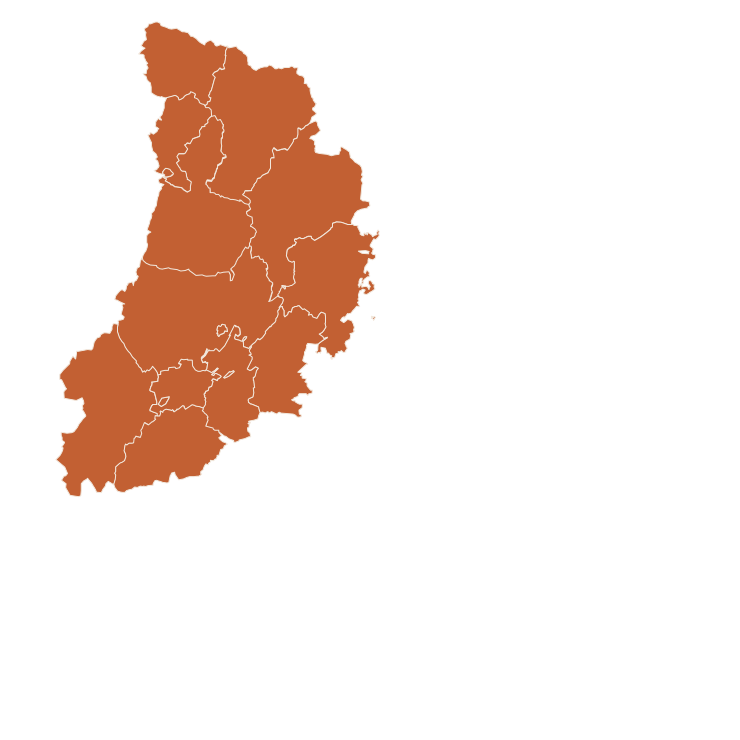
This is a variety of bull, traditionally produced in the area of Alt Urgell and other places in the Pyrenees, which artisan producers have recovered in recent years. .
The kidney bull has the characteristic shape of sausage bulls in the blind gut, that is, elongated spheres, more or less booty, with one end tied with a string. As for the color, it is brownish beige on the outside and the cut is dark beige, surrounded by a layer of white fat. The length is about 20 cm, and the texture is compact and greasy. In the elaboration, kidney is used, clean and previously scalded, and salted. Meats are not crushed but cut into large strips. A square of the belly is trimmed, stuffed inside the blind with the other selected lean meats and also cut into strips. Then it is cooked in the boiler, with broth, in a very gentle cooking of about two hours or two and a half hours. Once cooked, it is left to drain and, for five or six days, allowed to dry. In the same way that the kidney bull is done, the spleen bull can be done: you just need to replace one viscera with the other.
-
 Productes de la terra

 Meat and sausages



Season calendar
- GEN
- Feb
- Sea
- Apr
- Never
- JUN
- JUL
- AUG
- THIRST
- OCT
- nov
- From
Complementary information
The kidney bull is one of the most traditional in these areas that, like the other bulls, was done for the slaughter of the pig but, until now, had never been marketed. In Andorra it used to be eaten for Carnival accompanied by a piece of farm cake. As has happened with numerous traditional products, the consumption of this bull was being replaced by that of industrial sausages, with the exception of houses that continued to slaughter and make their own sausages.
Attributes and nutritional properties
Kidney bull is mainly sold in the brewers' store and, when the time is right, at craft product fairs. It is usually eaten with bread with tomato and can be included in sausage woods, hors d'oeuvres and salads.